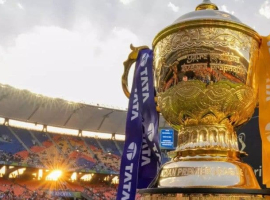
IPL 2026 Highest Earning Franchises – Ranking All 10 Teams by Income, Brand Value & Franchise Valuation
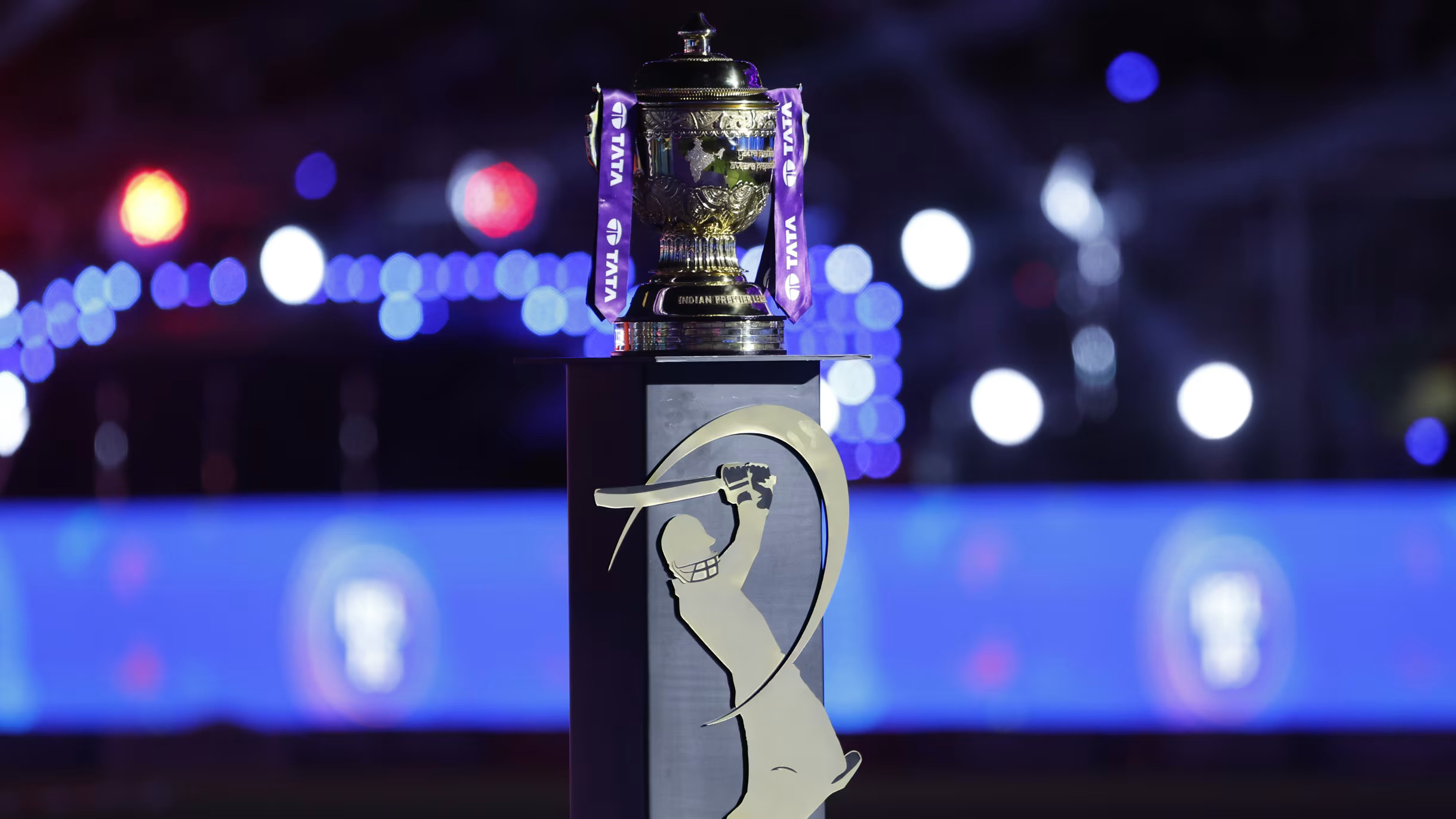
Cricket's Most Lucrative Business Race

The Indian Premier League has long stopped being just a cricket tournament. In 2026, it is a $18.5-billion business ecosystem — and within that ecosystem, each of the 10 franchises is fighting a parallel competition: not just for trophies, but for sponsorships, valuations, brand equity, and investor dollars.
This year, two landmark ownership deals redefined the financial landscape before a single ball was bowled. In March 2026, Royal Challengers Bengaluru changed hands for a record $1.78 billion, acquired by an Aditya Birla Group-led consortium. Days earlier, Rajasthan Royals fetched $1.63 billion from a US-based consortium led by tech entrepreneur Kal Somani. Together, these deals announced one truth clearly: IPL franchises are now among the most valuable sports assets on the planet.
So which team earns the most? Which franchise commands the highest brand value? And what is driving the money story in IPL 2026? Here is the complete ranking of all 10 teams — from the richest to the newest — along with a detailed breakdown of what powers each franchise financially.
How IPL Franchises Earn Money: The Revenue Model Explained
Before diving into team rankings, it’s important to understand where the money actually comes from. IPL franchise revenue flows from five main sources:
1. Central Media Rights Pool: The BCCI distributes 50% of the media rights revenue equally among all 10 teams. With the 2023–2027 broadcast deal valued at ₹48,390 crore (Star Sports TV rights at ₹23,575 crore + Viacom18/JioHotstar digital rights at ₹23,758 crore), each team receives approximately ₹550–600 crore ($55–60 million) annually — guaranteed, before they sell a single ticket.
2. Team Sponsorships: Jersey sponsors, title sponsors, and associate sponsors contribute substantial sums. Elite teams like MI and CSK command premium rates; a jersey front sponsor alone can be worth ₹40–100 crore per season.
3. Ticket & Stadium Revenue: Teams share match-day revenue with the host stadium association. Popular teams in large markets (Eden Gardens, Wankhede, Chepauk) earn significantly more than those in smaller venues.
4. Merchandise & Licensing: Jerseys, caps, and fan merchandise — especially from teams with iconic players like Virat Kohli (RCB), Rohit Sharma (MI), or MS Dhoni (CSK) — generate crores in licensing revenue.
5. Prize Money & Performance Bonuses: The IPL winner receives ₹20 crore, the runner-up ₹12 crore, with further amounts for third and fourth-placed teams. Half of prize money is distributed to players, with the rest going to the franchise.
With this model in mind, here is the complete 2026 earnings and brand value ranking of all 10 IPL franchises.
1 — Royal Challengers Bengaluru
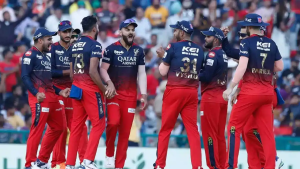
For 17 seasons, RCB were the IPL’s great paradox: a team with a massive global fan base, Virat Kohli on the roster, and zero titles. Then came 2025. Rajat Patidar led the side to their maiden IPL championship, defeating Punjab Kings in a final watched by 578 million viewers on JioCinema — itself a record. The title triggered a commercial avalanche.
Brand value surged to $269 million — an 18.5% jump in a single year — pushing RCB past Mumbai Indians and Chennai Super Kings to claim the top spot for the first time in their history. Weeks later, the Aditya Birla Group and Blackstone acquired the franchise for $1.78 billion, valuing RCB as the single most expensive IPL team ever sold. With 21 million Instagram followers — second only to MI — and Virat Kohli continuing at ₹21 crore, RCB’s commercial trajectory looks unstoppable heading into 2026.
2 — Mumbai Indians
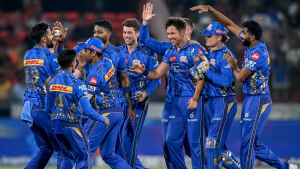
Owned by Reliance Industries through Mukesh Ambani — India’s richest man — Mumbai Indians are the IPL’s most consistently dominant commercial force. With five titles (2013, 2015, 2017, 2019, 2020), all under Rohit Sharma, MI built a brand that transcends seasons and results. In FY2025, MI generated ₹697 crore in revenue, even in a year where they struggled on the field.
Their $242 million brand value is backed by India’s largest IPL fan base, the highest digital viewership of any franchise, and Wankhede Stadium’s capacity crowds. The Knight Riders global brand model owes its inspiration partly to what MI pioneered domestically. With Hardik Pandya now captaining the side in 2026 and Mahela Jayawardene as coach, MI remain the gold standard for franchise commercial operations.
3 — Chennai Super Kings
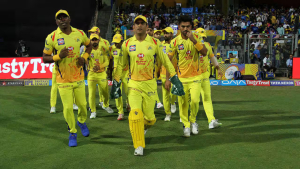
Five titles, 70% playoff appearances, and a fan loyalty rate that rivals football clubs in South America — CSK’s financial model is built on consistency. Chepauk Stadium regularly sees some of the highest occupancy rates in the IPL, and MS Dhoni’s continued association has turned routine merchandise into collector’s items. Even after years of CSK’s dominance, jersey sales spike every season.
Their $235 million brand value reflects a slight dip after missing the 2025 playoffs — proof that even the strongest IPL brands are not immune to on-field performance. Owned by India Cements under N. Srinivasan, CSK’s franchise valuation sits around $1.3–1.4 billion, still placing them among the top three in absolute terms.
4 — Kolkata Knight Riders
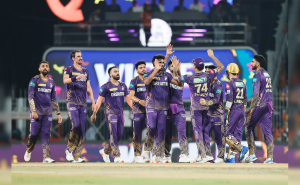
No IPL team has leveraged celebrity ownership quite like KKR. Shah Rukh Khan’s involvement has turned every KKR home game at Eden Gardens into a spectacle, and the franchise has used that star power to build an international brand — with teams in the MLC (US), CPL (Caribbean), and ILT20 (UAE). KKR’s $222 million brand value reflects this global footprint.
Three IPL titles — including the 2024 championship under Shreyas Iyer (before he moved to Punjab Kings in 2026) — give the franchise legitimate on-field credibility. Cameron Green’s record-breaking ₹25.2 crore signing as the most expensive overseas player in IPL history underscores KKR’s commitment to investing in marquee talent as a commercial strategy.
5 — Sunrisers Hyderabad
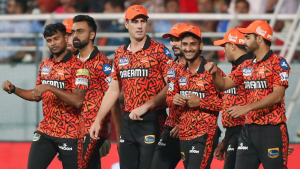
SRH’s story in 2026 is one of the IPL’s most compelling financial narratives. Their brand value of $154 million represents an 80%+ increase — the sharpest growth rate of any franchise in the current cycle. The catalyst was simple: consistent, aggressive cricket. Runner-up finishes in 2018 and 2024, a culture of backing explosive young batting, and strong South Indian corporate ties via Sun TV Network have made SRH one of the most commercially dynamic franchises in the league.
Heinrich Klaasen’s retention at ₹23 crore signals their intent to continue building a competitive, marketable squad. SRH proves that you don’t need the most titles to grow the fastest — you just need results, consistent presence in the late stages of the tournament, and a compelling on-field identity.
6 — Delhi Capitals
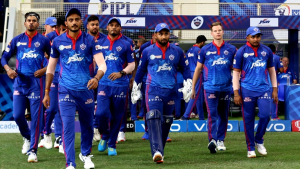
Delhi Capitals, co-owned by the GMR Group and JSW Sports, play in India’s capital city — arguably the country’s most commercially valuable market. Their $152 million brand value reflects the strength of that geography, even without a title. GMR Rao’s $3.2 billion personal net worth and JSW Group’s $24 billion valuation give DC unmatched financial backing among IPL co-ownership structures.
DC also have a multi-league footprint — teams in SA20, ILT20, CPL, and MLC — positioning them as one of the more globally ambitious franchises. The Capitals’ challenge in 2026 remains on the field: they’ve reached the final once (2020) but have yet to convert deep runs into silverware, which has kept their commercial ceiling lower than rivals in comparable markets.
7 — Rajasthan Royals
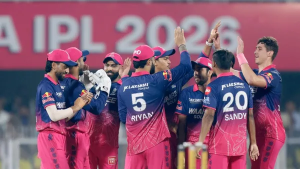
Rajasthan Royals occupy one of the IPL’s more fascinating financial positions. Their $146 million brand value places them 7th — but their franchise valuation of $1.63 billion (from the 2026 ownership sale) makes them the second most expensive IPL team by transaction price. The gap reflects what buyers are paying for: future potential, scarcity of available IPL franchises, and the broader IPL growth story, not just current commercial metrics.
The new US-based ownership consortium, backed by Walmart and Ford family investors, brings global capital and international distribution ambitions to Jaipur. The Raine Group, which managed the RR sale (the same firm behind Chelsea FC’s $5.2 billion deal), sets the professional standard for this transaction. Riyan Parag now leads the side on the field in 2026, bringing youthful energy to a franchise entering a new financial chapter.
8 — Gujarat Titans
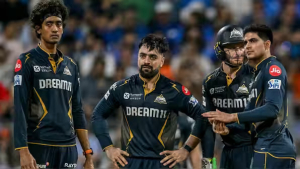
GT’s entry into the IPL in 2022 was one of the league’s most dramatic debut stories: franchise fee of ~₹5,625 crore, and then an IPL title in their very first season. Brand value of $142 million after just a few seasons reflects just how quickly on-field success translates into commercial traction. Backed by Torrent Group and CVC Capital Partners (who earlier made 350%+ returns selling similar sports assets), GT operate from Narendra Modi Stadium in Ahmedabad — the world’s largest cricket stadium — giving them match-day revenue potential that no other franchise can match.
Captain Shubman Gill is the face of the franchise and one of the IPL’s most marketable young players. GT’s challenge is maintaining momentum after a transitional 2024 season.
9 — Punjab Kings
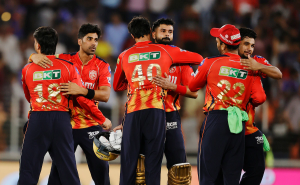
Punjab Kings delivered the IPL’s most dramatic brand value surge among established teams in 2025 — a 39.6% jump in a single cycle, the highest of any franchise. The trigger was their runner-up finish in IPL 2025 under Shreyas Iyer’s (now departed) leadership, and the massive media narrative built around their ‘nearly there’ story.
Co-owned by actress Preity Zinta and Mohit Burman, PBKS have celebrity appeal and strong North Indian viewership. Their ₹26.75 crore signing of Shreyas Iyer for 2026 — the second most expensive player in IPL auction history — signals that commercial growth is being matched with on-field investment. PBKS remain the IPL’s most intriguing commercial wildcard: strong growth, still waiting for their first title.
10 — Lucknow Super Giants
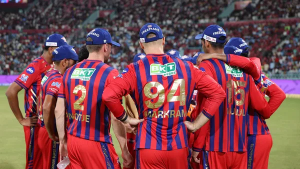
LSG are the IPL’s newest franchise alongside Gujarat Titans, entering the league in 2022. Their $122 million brand value is the lowest in the league — but that’s a reflection of age, not ambition. The RPSG Group, owned by billionaire Sanjiv Goenka, paid ₹7,090 crore as the expansion franchise fee and has consistently invested in marquee signings.
Most dramatically, LSG acquired Rishabh Pant for ₹27 crore — the highest player price in IPL history — making him the most expensive captain in the tournament. That single decision elevated LSG’s media visibility, sponsorship conversations, and digital following overnight. Pant’s explosive personality and comeback story from a near-fatal accident have made him one of Indian cricket’s most compelling figures, and LSG are smartly leveraging that investment.

- AI Companies That Are Helping the Indian Premier League 2026 - April 24, 2026
- Microsoft and Meta reduce workforce amid heavy investment in AI - April 24, 2026
- Reality of Indian Startup Ecosystem: Why This IIT Graduate Regrets Leaving a ₹28 LPA Job. - April 24, 2026