How Is AI Changing Indian Elections and the Electoral Process?
Three points you will get to know in this article:
1. ₹400+ crore spent on AI content, enabling multilingual outreach and hyper-personalised voter targeting at unprecedented scale.
2. Millions of voters encountered fabricated videos, cloned voices, and AI-resurrected politicians, making misinformation nearly indistinguishable from reality.
3. India has no dedicated AI law, and the ECI’s reactive guidelines are no match for the speed at which synthetic content spreads.
AI Is Impacting India’s Electoral Landscape in a Numbers of Ways
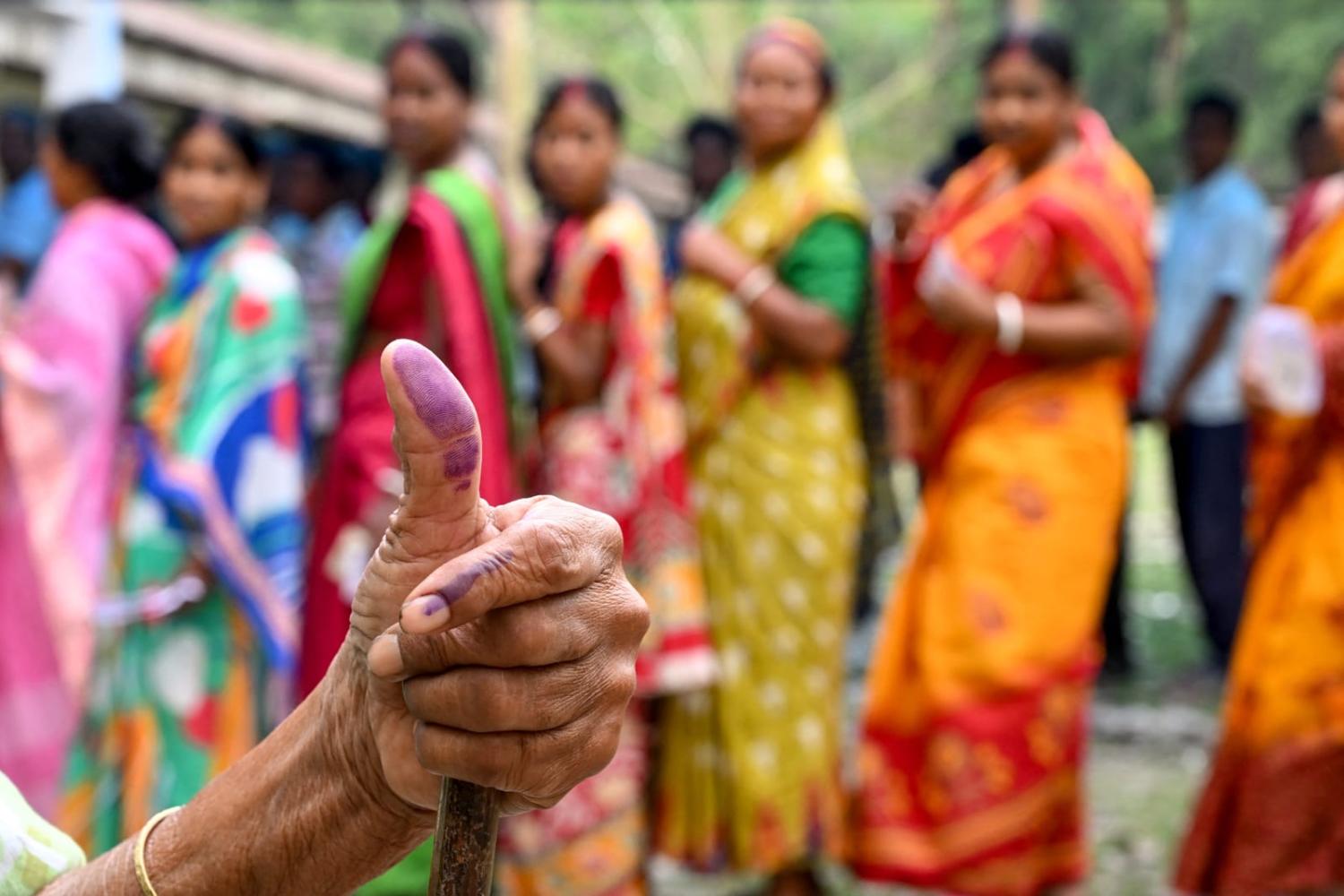
India is the world’s largest democracy. With nearly 100 crore registered voters spread across 28 states, 8 union territories, and hundreds of languages and dialects, conducting a free and fair election here is no small feat. But something new has entered the picture in recent years — artificial intelligence. From the way politicians campaign to the way voters receive information, AI is quietly but powerfully reshaping India’s electoral landscape.
The 2024 Lok Sabha elections — described by the United Nations Development Programme as part of a global “super election year” — served as a live laboratory for AI-powered political campaigning. Political parties collectively spent an estimated $50 million on AI-generated content alone. The results were fascinating, complex, and at times deeply troubling. This blog unpacks all the key ways AI is transforming Indian elections — the good, the bad, and the questions we still need to answer.
1. AI-Powered Campaigning: Reaching Every Voter, in Every Language
India’s linguistic diversity has always been a challenge for political parties. A speech delivered in Hindi does little for a Tamil-speaking voter in Chennai or a Kannada-speaking farmer in Dharwad. AI is changing that dramatically.
The most prominent example is Bhashini, the government’s AI-powered translation tool. During the 2024 elections, Prime Minister Narendra Modi used Bhashini to deliver speeches in Hindi that were instantly translated and voiced over in Tamil, Telugu, Malayalam, Kannada, Bengali, Marathi, and several other regional languages. For the first time, a national leader could speak directly to voters in their mother tongue without requiring separate speeches or interpreters. This is not just convenient — it is transformative for a country where language can determine electoral outcomes.
Beyond translation, AI tools enabled hyper-personalised messaging. Political parties used data analytics and AI algorithms to segment voters by geography, age group, caste, economic status, and online behaviour — and then delivered tailored messages to each group. According to one study, AI facilitated a twentyfold increase in digital content production without any expansion in workforce. The result was an unprecedented scale of voter outreach.
2. The Rise of Deepfakes: When Seeing Is No Longer Believing
Perhaps no application of AI in Indian elections has attracted more concern than deepfakes. These are AI-generated videos, images, or audio clips that make a real person appear to say or do something they never did — and they spread at extraordinary speed.
In 2024, millions of Indian voters encountered deepfake content. In one widely shared video, Bollywood actor Aamir Khan appeared to mock the ruling BJP government and endorse the Congress party — except the video was entirely fabricated using AI voice-cloning technology. Khan publicly denied it, but by the time the denial circulated, the video had already reached millions of users. Similarly, a deepfake video of actor Ranveer Singh making political statements went viral, prompting both actors to file legal complaints.
Deepfakes were also used more sympathetically — some political parties used AI to “resurrect” deceased leaders for their campaigns. Tamil Nadu’s DMK party displayed a video of former Chief Minister M. Karunanidhi, who died in 2018, appearing at a party event in his signature yellow scarf and dark glasses. The AIADMK party similarly used AI to recreate the voice of the iconic Jayalalithaa, popularly called “Amma.” These uses were authorised by the respective parties, but they raise profound questions about consent, grief, and the ethics of bringing the dead back into political life.
Voice-cloning tools were also used to make personalised robocalls in regional languages — a politician’s voice, now AI-generated, calling individual voters by name and seeking their support. The reach was staggering. The deception, often invisible.
3. AI in Electoral Administration: Making Voting Smarter
While parties use AI to campaign, the Election Commission of India (ECI) has been quietly integrating AI into the administrative backbone of Indian elections. The results have been significant.
Electoral Roll Management: AI algorithms now help maintain accurate, duplicate-free voter rolls. India’s voter base has crossed 99.1 crore, including a record 21.7 crore young voters. Keeping such a database clean and updated is an enormous task — one that AI handles far more efficiently than manual processes ever could.
Voter Accessibility: AI-powered text-to-speech tools and language translation services are making electoral information available to India’s differently-abled citizens and those who speak minority languages. For a democracy that claims to include every citizen, this is a meaningful step.
Surveillance and Anomaly Detection: AI-powered monitoring systems are being explored to detect irregularities during polling — from booth capturing attempts to unusual voter turnout patterns. The ECI has also used AI to track expenditure during campaigns, helping enforce spending limits.
4. Misinformation at Scale: When AI Becomes a Weapon
The power of AI to generate and distribute content at speed makes it a double-edged sword in the information ecosystem. During the 2024 elections, AI didn’t just create deepfakes — it amplified divisive, misleading, and sometimes downright dangerous content.
Meta’s AI systems approved political advertisements that contained incendiary language against minority communities in multiple Indian languages. The content slipped through automated moderation systems, reaching millions before being flagged. This was not an isolated incident — it highlighted how AI platforms, when left to self-regulate, can become vectors for communal polarisation.
AI also enabled a new scale of “meme warfare.” The Indian National Congress released AI-generated satire showing Modi as the lead character of a song titled “Chor” (thief). The BJP retaliated with AI-voiced content featuring the cloned voice of singer Mahendra Kapoor, who passed away in 2008. Political trolling is nothing new — but AI allowed it to happen at unprecedented speed, volume, and emotional intensity.
5. Regulation: Can the ECI Keep Up?
The Election Commission of India has responded to the AI challenge with a series of advisories and guidelines. Ahead of the 2024 elections, it directed political parties to refrain from creating or sharing deepfakes and AI-generated distorted content. More recently, it mandated that all AI-generated political content carry a clear label — such as “AI-Generated” or “Synthetic Content” — so voters can distinguish authentic material from fabricated content.
These are welcome steps. But most analysts agree that the ECI’s regulatory tools are not yet equipped for the speed and scale of the AI challenge. The Commission’s current framework — built on the Representation of the People Act and broad constitutional mandates — was designed for an era of pamphlets and rallies, not algorithmic content generation. Its directive requiring deepfakes to be removed within three hours of detection is practically difficult: deepfakes can be generated in seconds, shared across dozens of platforms simultaneously, and replicated endlessly once in circulation.
India also lacks a dedicated AI regulation law. In 2023, the government stated it had no plans to legislate on AI. That position shifted slightly after a controversy involving Google’s Gemini chatbot, prompting a directive requiring AI companies to seek approval before launching under-tested models. But comprehensive, enforceable AI legislation remains absent.
6. The Bigger Picture: AI and India's Democratic Future
AI’s entry into Indian elections raises questions that go beyond technology. At its best, AI can be a force for democratic inclusion — helping parties reach rural voters in their native tongues, giving smaller candidates cost-effective campaigning tools, and making electoral administration more efficient and transparent. At its worst, it can erode the very foundations of informed democracy: the ability of citizens to trust what they see, hear, and read.
There is also a concern about electoral equity. AI-powered campaigns are expensive. While they reduce some costs, they require significant investment in technology — a barrier that well-resourced parties can absorb but smaller parties and independent candidates cannot. If AI becomes the dominant language of electoral politics, the playing field could tilt further in favour of those who are already powerful.
What India needs is a collaborative framework involving the Election Commission, technology platforms, civil society, and political parties to define what responsible AI use in elections looks like. This means not just reactive guidelines that remove harmful content after the damage is done, but proactive standards — labelling requirements, audit mechanisms, transparency norms, and meaningful consequences for violations.
Conclusion
The 2024 Lok Sabha elections confirmed what many had anticipated — AI has permanently entered Indian electoral politics. It is not going away. The question is not whether AI will shape future elections, but how, and on whose terms.
For ordinary Indian voters, this new landscape demands a new kind of literacy — the ability to question what you see online, look for content labels, and seek out verified sources before forming political opinions. For policymakers and the Election Commission, it demands urgency: the gap between what AI can do and what India’s regulatory framework can handle is widening with every passing election cycle.
India has always taken pride in conducting the world’s largest democratic exercise with remarkable order and participation. As AI reshapes the terrain of that exercise, the country’s ability to adapt — thoughtfully, swiftly, and democratically — will determine whether technology becomes a servant of democracy or its most sophisticated adversary.

- AI Companies That Are Helping the Indian Premier League 2026 - April 24, 2026
- Microsoft and Meta reduce workforce amid heavy investment in AI - April 24, 2026
- Reality of Indian Startup Ecosystem: Why This IIT Graduate Regrets Leaving a ₹28 LPA Job. - April 24, 2026