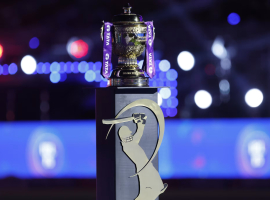
AI Companies That Are Helping the Indian Premier League 2026
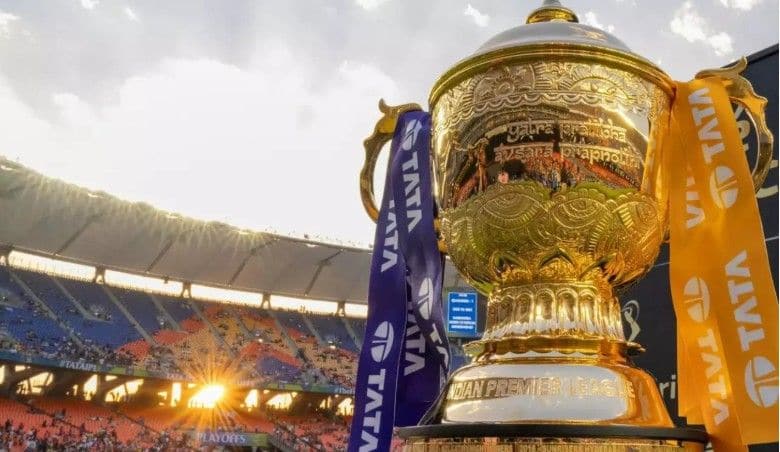
Three points you will get to know in this article:
1. Google Gemini (₹270 crore deal) and OpenAI (5 franchise partnerships) are using cricket as their fastest path to mass adoption in India.
2. Teams use machine learning for strategy, auctions, and injury prevention; Hawk-Eye powers DRS with millimetre-level precision.
3. AI brands are embedding their products directly into the fan experience, turning every match into a live product demonstration.
Which AI Companies Are Investing Money and Tech in IPL 2026?
The Indian Premier League has always been more than cricket. Since its first edition in 2008, it has evolved into one of the most commercially powerful sporting properties on the planet — a high-octane blend of sport, entertainment, and business. Today, it is also quietly becoming one of the world’s largest testing grounds for artificial intelligence.
From pitch-side cameras powered by machine learning to billion-rupee sponsorship deals with global AI giants, the IPL and the AI industry are rapidly converging. The question is no longer whether technology has a place in cricket — it is how deeply AI is already embedded in every aspect of the game.
Why the IPL Is the Perfect Stage for AI
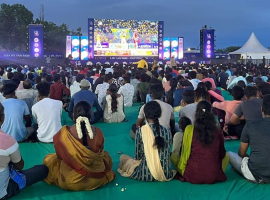
With an estimated 500 to 620 million viewers tuning in each season, the IPL offers something few platforms in the world can match: instant, national scale. For AI companies racing to move from niche technology to everyday household product, that reach is invaluable.
“AI companies are at a stage where they need to scale rapidly in both user base and usage. IPL as a platform on linear TV gives them immediate national reach across demographics, which is hard to achieve through digital alone,” noted Anshu Yardi of TAM Media Research. In other words, the IPL is not just a sponsorship opportunity — it is an accelerant.
This thinking has triggered a wave of AI investment into the league, reshaping the nature of corporate partnerships, the broadcast experience, and even how teams are built.
1. Google and Gemini
The most consequential AI entry into the IPL came in January 2026, when the Board of Control for Cricket in India (BCCI) signed a three-year sponsorship deal with Google’s AI platform Gemini — valued at approximately ₹270 crore, making it one of the largest AI-led sports marketing investments in India’s history. The agreement covers the 2026, 2027, and 2028 IPL seasons, positioning Gemini alongside title sponsor Tata Group as one of the league’s principal commercial partners.
But the deal goes well beyond logo placement on broadcast screens. At its heart is Google’s AI Mode in Search, which is integrated directly into live IPL broadcasts, providing real-time match statistics, win probabilities, and contextual insights as the action unfolds. Fans watching on JioHotstar or Star Sports can now engage with the game through a conversational, AI-powered lens — asking questions, accessing instant player histories, and exploring match dynamics in ways that were not possible before.
Google’s Devajit Saikia, BCCI Secretary, described the collaboration as one that will “fundamentally transform the fan experience” by offering enriched and conversational insights during live play.
Alongside the IPL deal, Google has extended its AI-cricket partnership further, with Gemini serving as the Official AI Fan Companion for the ICC Men’s T20 World Cup 2026. Features include the “Explore Cricket” tab in the Gemini app, Insight Cards that generate shareable player trivia, and an interactive contest called “Craziest Fan Kaun” — inviting fans to use Gemini’s image generation tools to create personalised fan avatars for a chance to attend matches live.
2. OpenAI and ChatGPT: The Franchise-First Strategy
While Google entered through the BCCI’s official channels, OpenAI has taken a different route — going directly to franchises. For IPL 2026, OpenAI partnered with five teams: Chennai Super Kings, Delhi Capitals, Lucknow Super Giants, Royal Challengers Bengaluru, and Rajasthan Royals.
Each partnership is designed to be integration-led rather than purely commercial. OpenAI launched a campaign titled “Everyday Superheroes,” featuring seven short films set across IPL home cities, showing how ordinary people use ChatGPT in everyday situations at work, in education, and in daily life.
For fans, the partnership introduced the ChatGPT Match IQ Award — a post-match recognition for the most impactful on-field decision — and a custom GPT tool called #FullFanMode that allows fans to generate personalised team posters for social media sharing.
For Rajasthan Royals, the relationship runs particularly deep. Alok Chitre, the team’s Chief Operating Officer, noted that the OpenAI partnership began before any sponsorship contract was signed, shaping its character from the ground up: “These are genuine use cases that put the product in a cricket fan’s hands in a moment of high emotion and high engagement.”
OpenAI had earlier made its entry into Indian cricket through the Women’s Premier League, where ChatGPT signed a two-year sponsorship deal — an early proof of concept that the AI industry saw the cricket ecosystem as a serious marketing vehicle.
3. CricMind.ai: The Indian Challenger
While global giants dominate the headlines, homegrown platforms are also staking their claim. CricMind.ai launched at the start of IPL 2026 as India’s first dedicated AI-powered cricket prediction and analytics platform, and notably made it completely free for the entire season.
Built around a proprietary “Oracle Engine,” the platform draws on a dataset covering 18 IPL seasons, over 1,100 matches, 925 players, and more than 278,000 individual ball records. It offers pre-match predictions for all 74 games of the season, a Live Predictor for in-match forecasting, a Player Scout tool for individual performance profiling, and a Match Simulator that lets users model hypothetical scenarios against real historical data.
What sets CricMind.ai apart is its commitment to transparency. Every prediction is published before the match and tracked against actual results — a philosophy the team describes plainly: “Cricket analytics in India has been shaped by opinion for too long. We are not asking fans to trust a number. We are giving them every reason to scrutinise one.”
4. AI in the Dugout: How Franchises Are Using Machine Learning
Beyond sponsorships and fan-facing tools, AI is reshaping how IPL franchises operate from the inside.
Mumbai Indians are among the most aggressive adopters. Their data science team uses AI-driven bowling rotation models that ingest historical ball-tracking data across multiple seasons, identifying statistical vulnerabilities in individual batters during the crucial death overs (overs 17 to 20). The result: a reported improvement of nearly 30% in death-over wicket yield. Chennai Super Kings run real-time mid-match simulations on every batter they face, identifying delivery patterns that expose weaknesses within the course of an innings.
Auction strategies are also increasingly data-driven. The IPL 2026 auction — where Cameron Green went for ₹25.20 crore — was shaped as much by predictive models as by human scouts. Teams run Monte Carlo simulations to calculate optimal bidding strategies, probable price ceilings, and contingency plans for when priority targets go beyond budget. AI platforms assess players using fitness metrics, historical performances across conditions, and even micro-analyses of technique gathered from domestic leagues.
Player health is another frontier. Wearable devices now feed GPS tracking data, heart rate variability, and biomechanical information from bowling sessions into machine learning models that produce daily player readiness scores — flagging injury risk before symptoms become visible to medical staff. These systems run on commercial infrastructure including AWS SageMaker for model training and Tableau for delivering insights to coaching teams.
5. AI in the Broadcast Box
For the hundreds of millions watching at home, AI’s most visible contribution to the IPL is through the broadcast experience. The Decision Review System (DRS), powered by Hawk-Eye’s network of six to eight high-speed cameras capturing 340 frames per second, builds a three-dimensional ball trajectory accurate to around 2.5 millimetres — making contentious LBW decisions and no-ball calls far more reliable than human judgment alone.
But Hawk-Eye data no longer stops at umpiring. The ball-tracking data from every delivery is stored and made available to franchise analytics teams within hours, feeding directly into the machine learning pipelines that drive team strategy.
Streaming platforms are also deploying AI to personalise the viewer experience. JioHotstar uses recommendation algorithms to tailor highlight feeds based on watch history — ensuring a viewer who loves big sixes sees a different curation than someone who follows bowling strategies closely. AI-generated automated highlights, capable of identifying key moments within seconds of them occurring, feed the massive social media appetite around the IPL with minimal human intervention.
From Sponsorship to Infrastructure
What is perhaps most significant about the AI wave entering the IPL is the shift in how these partnerships are structured. Traditional sponsorships prioritised brand visibility — logos on jerseys, boundary boards, broadcast graphics. The AI era is different. As Binda Dey, Chief Marketing Officer of Knight Riders Group, observed: “The role of AI brands is already evolving beyond visibility to co-creating fan experiences, personalised content, and smarter engagement within owned ecosystems.”
This is integration, not advertising. AI companies are embedding their products directly into the fan journey — through live search, through personalised content tools, through franchise platforms — using cricket as an environment where their technology can be experienced and adopted at scale.
The commercial vacuum left by India’s tightening regulations on real-money gaming platforms, which had previously poured billions into cricket sponsorships, accelerated this shift. AI brands moved in at precisely the right moment, offering both credibility and genuine technological value in exchange for cricket’s unmatched reach.
Conclusion
The consensus among franchise executives and marketing professionals is that AI’s role in the IPL will only deepen. A year ago, artificial intelligence was barely a category in the league’s commercial ecosystem. Today, multiple franchises carry AI sponsors, Google has committed to a three-year deal with the BCCI, and purpose-built platforms like CricMind.ai are giving fans tools that rival what professional analysts were using just a few seasons ago.
As one franchise executive put it: “AI won’t just be a category. It will be the infrastructure layer of every partnership.”
Whether you are a fan watching from home, a player preparing for a match, or a coach deciding the batting order in the final over, AI is already part of your IPL experience — and it is only getting started.

- AI Companies That Are Helping the Indian Premier League 2026 - April 24, 2026
- Microsoft and Meta reduce workforce amid heavy investment in AI - April 24, 2026
- Reality of Indian Startup Ecosystem: Why This IIT Graduate Regrets Leaving a ₹28 LPA Job. - April 24, 2026