Wakefit posts record Rs 452 crore revenue in Q2, but profit stays flat at Rs 15.9 crore
Three points you will get to know in this article:
- How Wakefit reached its highest quarterly revenue ever, ₹452 crore, in Q2 FY27.
- Why net profit stayed nearly the same even though revenue grew strongly.
- How store expansion, mattress sales and furniture demand are helping Wakefit’s business.
Wakefit posts record Q2 FY27 revenue of ₹452 crore, a 19.9% rise, though net profit stays flat at ₹15.9 crore as costs increase.
Wakefit Posts Its Highest Quarterly Revenue Ever in Q2 FY27
Wakefit Innovations Limited, a Bengaluru-based home and sleep solutions company, reported its highest-ever quarterly revenue of ₹451.99 crore in Q2 FY27. This marks a 19.9% rise from ₹376.88 crore in the same quarter last year.
However, the company’s profit after tax (PAT) stayed nearly flat at ₹15.89 crore, against ₹15.96 crore in Q2 FY26. The results indicate that Wakefit’s sales are growing, but higher operating costs and tax expenses are constraining the rise in reported net profit.
The company announced its unaudited financial results for the quarter ended September 30, 2026, on November 12, 2026.
Even with flat reported profit, Wakefit achieved growth in revenue, EBITDA and profit before tax. It also grew its retail network past the 200-store milestone.
Wakefit Q2 FY27 Financial Results: A Quick Overview
Wakefit’s performance for the quarter shows a distinct gap between revenue growth and reported profitability. Although revenue grew by close to 20%, net profit stayed nearly flat compared with the same period last year.
Below are the main financial figures:
| Financial Metric | Q2 FY27 | Q2 FY26 | YoY Change |
| Revenue from Operations | ₹451.99 crore | ₹376.88 crore | +19.9% |
| Profit After Tax | ₹15.89 crore | ₹15.96 crore | -0.4% |
| Profit Before Tax | ₹26.54 crore | ₹15.96 crore | +66.3% |
| Reported EBITDA* | ₹50.15 crore | ₹41.27 crore | +21.5% |
| EBITDA Margin* | 11.1% | 11.0% | +0.1 percentage points |
The company’s profit before tax rose by 66.3% to ₹26.54 crore. However, the final profit figure was affected by a deferred tax expense.
During the quarter, Wakefit reported a deferred tax charge of ₹6.43 crore. Without this deferred tax movement, its adjusted profit after tax was ₹22.32 crore, a 39.9% year-on-year increase. As a result, the flat reported net profit does not fully reflect its operating performance.
Why Did Wakefit's Profit Stay Flat Even Though Revenue Grew?
Even though Wakefit posted strong sales, the conditions it operated in stayed difficult. Its profitability was impacted by rising raw material prices, increased expenses and supply-chain disruptions.
1. Increasing Costs of Raw Materials
Wakefit encountered elevated prices for raw materials tied to crude, especially Polyol and TDI. These materials serve as key inputs for the mattress industry.
The company also pointed to geopolitical disruptions in West Asia. These events impacted the availability of raw materials and logistics throughout the industry.
Consequently, the company came under pressure on its gross margin. In Q2 FY27, its gross margin fell to 53.9% from 57.7% in the same quarter a year earlier.
2. Increased Operating Expenses
In Q2 FY27, Wakefit’s total expenses rose to roughly ₹441.4 crore, up from ₹370.5 crore in Q2 FY26.
This rise reflects spending on materials, employee costs and business expansion. The company is putting money into its retail network, manufacturing capabilities and workforce to support future growth.
Over time, these investments can make the business stronger. In the short term, though, they also drive costs up.
3. Deferred Tax Cost
Reported profitability was also impacted by the deferred tax charge.
In Q2 FY27, Wakefit recorded a deferred tax expense of ₹6.43 crore. This came after a deferred tax asset recognised earlier was partially unwound.
Excluding this deferred tax movement, the company’s profit after tax stood at ₹22.32 crore. That reflects a 39.9% increase over the same quarter of the previous year.
As a result, when assessing its financial performance, investors should look at both the reported PAT and the company’s adjusted figure.
Mattress and Furniture Sales Fuel Wakefit's Expansion
Mattresses continue to be Wakefit’s biggest product category. Furniture, too, is adding to its revenue growth, however.
In Q2 FY27, mattress revenue rose 21.4% year-on-year, while furniture revenue climbed 24.9%.
The company’s revenue mix by category was as follows:
- Mattresses:8%
- Furniture: 1%
- Furnishings:1%
These numbers indicate that Wakefit is steadily developing a wider home and furnishing business that extends beyond its core mattress category.
Why Is Furniture Growing in Importance for Wakefit?
Furniture gives Wakefit a chance to reach customers who want more complete home solutions.
Customers buying mattresses may also require beds, sofas, wardrobes and other furniture items. By offering these products, the company can meet more household needs through the same brand and retail network.
In addition, growth in furniture can help diversify revenue sources. Over time, this may lessen the company’s reliance on a single product category.
Wakefit Reaches the 200-Store Milestone
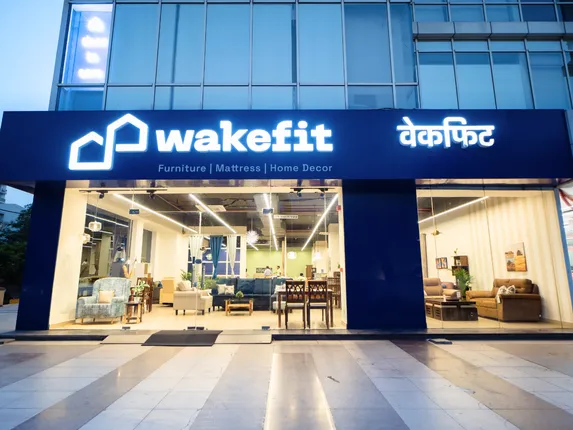
Another key highlight of the quarter was the expansion of retail operations. As of September 30, 2026, Wakefit had surpassed the 200-store mark, operating 205 company-owned, company-operated (COCO) stores.
During Q2 FY27, the company added 41 new stores. Its retail channel also posted year-on-year growth of approximately 24%.
This expansion shows Wakefit’s commitment to bolstering its offline footprint in addition to its digital sales channels.
What Makes Offline Retail Significant for Wakefit?
Purchasing mattresses and furniture typically requires evaluating the product in person. Before buying, customers may wish to assess comfort, material quality, size and design.
Brick-and-mortar stores let customers experience products firsthand. They also assist the company in building stronger ties with its customers.
Wakefit’s omnichannel strategy merges the ease of online shopping with in-store product discovery. Such an approach can help the company connect with customers in various cities and with different shopping habits.
Wakefit's H1 FY27 results reflect steady growth
Wakefit likewise posted robust revenue growth for the first half of FY27.
Revenue from operations stood at ₹856.90 crore for the six months ended September 30, 2026, versus ₹724 crore in H1 FY26. This marks an 18.4% rise year on year.
Other financial highlights were as follows:
- Profit After Tax: ₹39.27 crore, an increase of 10.4%.
- Reported EBITDA: ₹106.55 crore, up 24%.
- Reported EBITDA Margin:4%, against 11.9% a year earlier.
The results show that Wakefit is sustaining its growth momentum through the first half of the financial year.
Returning Customers Drive Revenue Expansion
During Q2 FY27, repeat customers accounted for 32.4% of Wakefit’s revenue.
This is a key business metric, as returning customers can help drive more predictable sales. It also shows the company’s work to build customer trust through its products and services.
Additionally, 70% of Wakefit’s quarterly sales came through its own channels, while external channels made up 30%. This balance underscores the value of its direct-to-consumer business model.
What is Wakefit's approach to growth in the future?
Wakefit is concentrating on expanding its retail footprint, developing new products and improving operational efficiency to reinforce its standing in India’s home and furnishing market.
Several key areas form part of its strategy.
1. Growing the Retail Network
The company intends to bolster its offline footprint and connect with more customers via brick-and-mortar stores.
Its network of 205 stores offers a base for additional expansion. In addition, its expanding presence across various cities can help enhance product accessibility.
2. Expanding Beyond Mattresses
Wakefit is broadening its furniture and furnishings ranges in order to become a more comprehensive home solutions brand.
The robust growth in furniture revenue indicates that customers are engaging with multiple product categories more and more.
3. Enhancing Manufacturing and Operations
Wakefit’s vertically integrated business model links manufacturing, warehousing, distribution, and retail.
This structure can assist the company in managing product quality and supply more efficiently. Nevertheless, it must also keep raw material costs in check and safeguard margins as it expands.
What implications does Wakefit's Q2 FY27 performance hold for the home and furniture industry?
Wakefit’s results bring into focus both the opportunities and the challenges that India’s organised home and furnishing market faces.
Growing demand for mattresses, furniture and home products is opening up opportunities for brands that have strong distribution networks. Meanwhile, competition and swings in raw material prices can have an impact on profitability.
Wakefit’s performance shows that revenue growth by itself does not ensure a higher net profit. Companies must also keep production costs, logistics, employee expenses and taxes under control.
Its expansion into retail and diversification of products could help support growth over the long term. Still, sustaining healthy margins will remain essential.
What Does the Future Hold for Wakefit?
Wakefit’s Q2 FY27 results show a mixed yet encouraging picture. The company posted record quarterly revenue of ₹451.99 crore and raised its profit before tax by 66.3%.
Yet reported net profit stayed almost flat at ₹15.89 crore due to the deferred tax charge and other cost pressures.
The company continues to invest in retail expansion, manufacturing and product categories beyond mattresses. Its expanding furniture business and repeat customer contribution also offer further growth opportunities.
Looking ahead, the main challenge will be turning higher sales into stronger and more consistent profitability.
Overall, Wakefit’s latest performance underscores a growing home solutions business that is expanding its market presence while managing cost pressures. Its capacity to improve margins and sustain customer demand will be important in its next phase of growth.

- Wakefit posts record Rs 452 crore revenue in Q2, but profit stays flat at Rs 15.9 crore - November 13, 2026
- Bootstrapped Mumbai pizza brand Hundo Pizza raises Rs 7.5 crore in first institutional funding - November 12, 2026
- Nearly 50% of our team is working remotely: Snapdeal, Zomato cut office attendance amid rising pollution - November 12, 2026