Vidyakul Raises ₹10 Crore in Debt Funding from Michael & Susan Dell Foundation to Expand Learning Across India
Three points you will get to know in this article:
- How Vidyakul plans to use its ₹10 crore debt funding to broaden access to affordable education throughout India.
- How AI-powered Hindi learning tools will enhance student support and address academic queries.
- How Vidyakul’s Class 12 results and expanding student community demonstrate its influence on education.
Vidyakul obtains ₹10 crore in debt funding from the Michael & Susan Dell Foundation to expand Hindi learning, AI tools, and student support.
Vidyakul Secures ₹10 Crore in Funding from the Michael & Susan Dell Foundation
Vidyakul, a vernacular-first learning platform serving state-board students, has secured ₹10 crore in debt financing from the Michael & Susan Dell Foundation. The funding will support the education startup in expanding its courses, assessments, and personalised academic assistance for students throughout India.
Established in 2018, Vidyakul aims to make quality education accessible to students who prefer studying in Hindi and other regional languages. The platform mainly caters to students in Classes 9 to 12, especially those from Tier 2, Tier 3, and rural regions.
The company intends to use the new financing to enhance its learning programmes and serve a larger number of students. It also plans to broaden its AI-powered tools, which respond to academic queries and offer personalised learning assistance in Hindi.
At present, Vidyakul addresses around 1.2 million student questions each month. The company seeks to build on this momentum and create more educational pathways for students after Class 12.
This investment underscores the growing significance of affordable, technology-enabled education for students outside India’s major metropolitan cities.
How Does Vidyakul Plan to Use the ₹10 Crore Funding?
Vidyakul intends to use the funding to expand its educational services and enhance the student learning experience. Its strategy centers on three key areas.
1. Expand Courses and Assessments for Classes 9 to 12
The company plans to broaden its courses and assessments for students in Classes 9 to 12.
These programmes will support students preparing for state-board examinations with structured lessons, practice resources and academic guidance.
Vidyakul mainly caters to students from the Bihar, Uttar Pradesh and Gujarat state boards. Its expansion strategy seeks to make its educational resources available to more learners throughout India.
In addition, the company aims to enhance personalised academic support. This approach may help students grasp challenging subjects and prepare more effectively for examinations.
2. Enhance AI-Powered Hindi Learning Tools
Artificial intelligence is becoming a key component of Vidyakul’s educational strategy.
The company intends to broaden its AI-powered tools to respond to student questions and provide personalised learning experiences in Hindi.
At present, these tools help answer approximately 1.2 million questions each month. This creates a base for extending AI-driven academic support to a broader student community.
AI-powered learning tools can provide several advantages:
- Immediate academic support: Students can receive help with questions without always having to wait for a teacher.
- Hindi-language learning: Learners can grasp concepts in a language they are familiar with.
- Personalised assistance: Students can receive support tailored to their learning requirements.
- Improved accessibility: Digital tools can enable students in different locations to access educational support.
However, AI tools are most effective when used alongside experienced teachers and dependable educational content. Vidyakul’s approach seeks to reinforce digital learning while continuing to offer academic guidance.
3. Create Learning Pathways Beyond Class 12
Vidyakul also intends to broaden its offerings beyond school education.
Class 12 represents a significant milestone in a student’s academic journey. After finishing school, students require guidance in selecting higher education, professional courses, and career opportunities.
The company seeks to create additional pathways to assist students throughout this transition.
This expansion could enable Vidyakul to establish longer-term relationships with learners rather than focusing exclusively on school examinations.
Vidyakul Announces a 99.8% Pass Rate in Bihar Class 12 Board Exams
Vidyakul’s latest results underscore its expanding presence among state-board students.
The company reported that 99.8% of its Bihar students who took the 2026 Class 12 board examinations passed. By comparison, the statewide pass rate was 85%.
In addition, 70% of Vidyakul’s students achieved first division.
These results reflect the platform’s reported academic performance and emphasize the importance of structured learning and academic support.
Key Performance Highlights
99.8% Bihar Class 12 pass rate among Vidyakul students in 2026
70% Students securing first division
1.17 lakh+ Paid programme enrolments in 2025–26
15 million+ YouTube subscribers across Vidyakul channels
11 lakh+ Students accessing free educational content annually
The company also recorded over 1.17 lakh paid programme enrolments in the 2025–26 academic year.
Additionally, its YouTube channels have garnered more than 15 million subscribers. Every year, over 11 lakh students use its free educational content.
These figures demonstrate the company’s expanding digital learning community.
What Did the Founders and Investors Say About the Funding?
Tarun Saini, Founder and CEO of Vidyakul, emphasised the importance of quality teachers and accessible education for students in smaller towns and villages.
He explained that the company aims to help students achieve academic results that their families may once have considered unattainable.
Saini also stated that support from the Michael & Susan Dell Foundation would enable Vidyakul to reach more students and enhance its educational services.
Samar Bajaj, Head of Education at the Michael & Susan Dell Foundation, emphasised the significance of strong Class 12 results.
He pointed out that strong examination performance can open doors to higher education and rewarding careers.
Bajaj also acknowledged Vidyakul’s efforts to provide affordable, high-quality learning to state-board students in their own language and from home.
The foundation’s support demonstrates its interest in educational initiatives capable of producing measurable, long-term benefits.
How Vidyakul Is Expanding Access to Education in Rural India
For many students in smaller cities and rural communities, accessing quality education continues to be difficult.
Some learners struggle to find experienced teachers, reasonably priced coaching and well-organised study materials. Language may also become an obstacle when educational resources are not provided in a familiar format.
Vidyakul seeks to tackle these challenges by prioritising vernacular education.
Its platform brings together live classes, recorded lessons, affordable courses and personalised academic support.
Why Is Learning in the Vernacular Important?
Students often grasp complex concepts more easily when teachers explain them in a language they know well.
As a result, vernacular learning can enhance accessibility and enable students to take part in their education with greater confidence.
Vidyakul primarily serves Hindi-medium learners while also supporting students from other regional-language backgrounds.
Its model provides several advantages:
- Affordable educational programmes for students.
- Live and recorded classes taught by experienced teachers.
- Learning materials tailored to state-board curricula.
- Academic assistance for examination preparation.
- Digital content available beyond major cities.
By bringing these services together, Vidyakul aims to lessen educational barriers for students throughout Bharat.
Who Established Vidyakul?
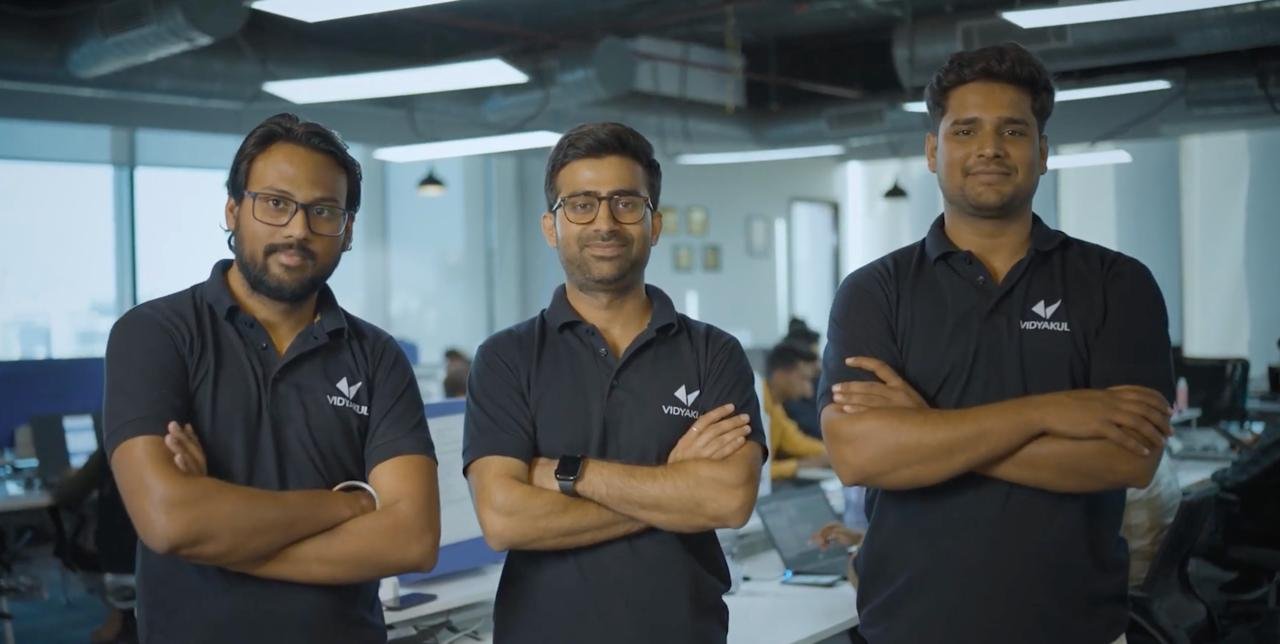
Tarun Saini and Raman Garg founded Vidyakul in 2018. The company’s headquarters are located in Gurugram, Haryana.
It was created to provide state-board students with affordable and accessible digital education.
The platform provides live and recorded courses for students enrolled in the Bihar, Uttar Pradesh, and Gujarat boards.
Over the years, Vidyakul has developed a large learning community, especially among Hindi-medium students.
Its business model combines paid educational programmes with free learning resources. This approach enables students to access learning materials according to their needs and budgets.
About the Michael & Susan Dell Foundation
The Michael & Susan Dell Foundation aims to enhance education, health, and economic mobility for individuals and communities worldwide.
Established by Michael and Susan Dell, the organisation concentrates on initiatives designed to achieve measurable, lasting social impact.
The foundation has allocated more than $10 billion to expanding opportunities for individuals and communities.
Its support for Vidyakul demonstrates its commitment to broadening access to quality education and helping students develop stronger academic and career prospects.
What Does the Funding Signify for India's EdTech Sector?
Vidyakul’s ₹10 crore funding underscores the significance of regional-language education in India’s expanding EdTech market.
Although many education platforms target English-speaking students and national-level examinations, numerous learners rely on state-board curricula.
These students require affordable courses, relevant study materials, and teachers who understand their academic needs.
Vidyakul’s strategy is centered on this underserved group.
Its investment in AI-powered Hindi learning tools also mirrors a broader move towards personalised digital education.
However, sustained success will rely on learning outcomes, student engagement, and the quality of academic support.
The company’s next challenge will be expanding its reach while preserving affordable pricing and dependable teaching standards.
What Lies Ahead for Vidyakul?
With ₹10 crore in new debt funding, Vidyakul is gearing up for its next phase of growth.
The company intends to broaden its courses, assessments, and personalised academic support for students in Classes 9 to 12. It also plans to enhance its AI-powered Hindi learning tools and create educational pathways for students after Class 12.
Its reported Class 12 results, rising paid enrolments, and extensive YouTube community offer a strong base for continued expansion.
More importantly, Vidyakul aims to make high-quality education accessible to students who may not have convenient access to traditional coaching or experienced teachers.
Overall, Vidyakul’s ₹10 crore funding from the Michael & Susan Dell Foundation represents a significant step toward its goal of providing affordable, regional-language education to more students throughout India.

- Vidyakul Raises ₹10 Crore in Debt Funding from Michael & Susan Dell Foundation to Expand Learning Across India - November 26, 2026
- Prime Industries Signs MoU with Wahi Sons for Specialised Precision Engineering Component Manufacturing - November 21, 2026
- Programmers will be telling AI what to write: IBM CEO on jobs, quantum and India’s $3 billion - November 17, 2026