The Bindi Project’s Enthusiastic Pitch on Shark Tank India
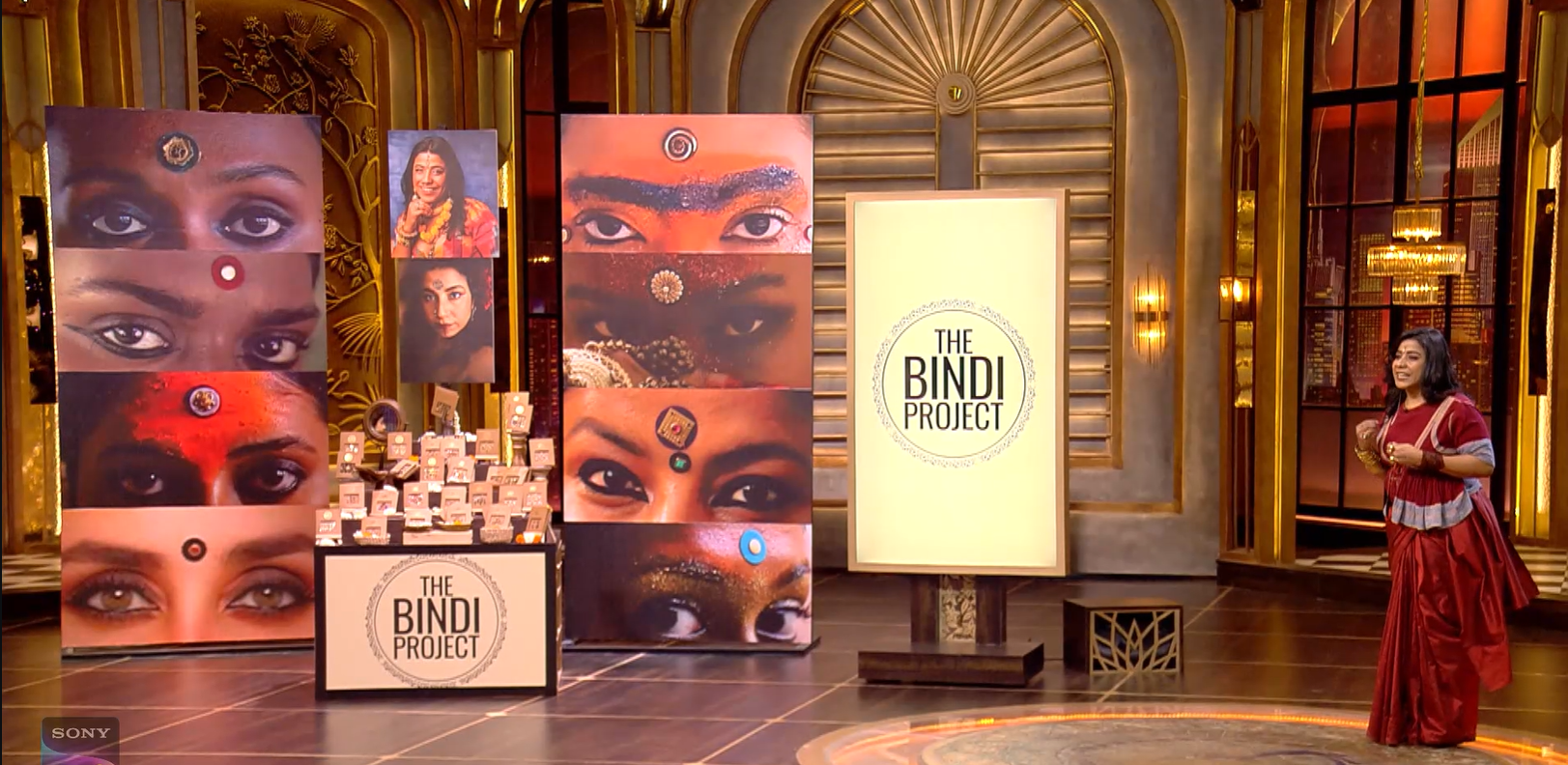
The Bindi Project's Enthusiastic Pitch on Shark Tank India

Three points you will get to know in this article:

1. Meghna Khanna seeks ₹50 lakhs for premium handcrafted bindis
2. Sharks call it a project, not scalable business
3. Monthly sales hit ₹13 lakhs with 43% profit margins

The Bindi Project's Enthusiastic Pitch on Shark Tank India

Meghna Khanna walked into Shark Tank India Season 5 with more than just a business idea. She carried a cultural narrative, a feminist vision, and handcrafted bindis meant to revive what she called “divine feminine energy.” But despite hitting ₹13 lakh in monthly sales, all the sharks stepped back.

Why? Because they saw passion, not scalability. Art, not commerce.

The founder, dressed in her signature rebellious style, opened with a deeply personal monologue about being both Kali and Parvati,  wild yet nurturing, fierce yet creative. It was poetic. It was authentic. But was it enough to convince investors?

Who Is Meghna Khanna? From Fighter Pilot's Daughter To Bindi Entrepreneur

Meghna comes from a defence family. Her father flew fighter jets in the Indian Air Force, which meant she grew up moving cities, absorbing cultures, and constantly seeking the “next thing.” That restlessness shaped her.

She studied at Symbiosis Institute of Management Studies in Pune, though by her own admission, she was an “outstanding student”,  meaning she stood outside the classroom more often than inside it. Classic rebel energy.

For 18 years, she ran a boutique accessories store called Levitate in Bengaluru. It made ₹3–4 lakhs monthly, with ₹1.5 lakhs in profit. Small, steady, sustainable. She shut it down during Covid and decided to start fresh.

That’s when bindis came calling.

A friend told her about a gold bindi passed down through generations,  reusable, sentimental, sacred. That story disturbed Meghna. Why had bindis become throwaway commodities? Why were they stuck in the same designs from the 1980s?

She decided to change that.

What Is The Bindi Project?

Bindi Project Logo

The Bindi Project isn’t your regular stick-on-and-forget kind of brand. It’s design-led, artisan-driven, and rooted in storytelling.

Each bindi is handcrafted by women from marginalised communities. They’re reusable, bold, and priced like jewellery,  because that’s how Meghna sees them. Not accessories. Jewellery for the forehead.

She uses upcycled materials like old sarees and leather scraps, turning them into intricate pieces that blend tradition with modern aesthetics. The packaging? Also made from vintage saree fabric.

Her vision was simple but ambitious: create a premium category in an unorganised, cluttered market that hasn’t innovated in decades.

And honestly, the idea wasn’t bad. The execution, however, raised eyebrows.


Official Website – The Bindi Project

The Bindi Project’s Financial Breakdown

Meghna asked for ₹50 lakhs for 10% equity, valuing her business at ₹5 crore. She had invested just ₹5 lakhs of her own money.

Here’s how her sales looked:

  • September: ₹7 lakhs
  • October: ₹11 lakhs
  • November: ₹13 lakhs


Website sales (after focusing on it from August) contributed around ₹2.5–3 lakhs per month. The rest came from pop-ups across different cities.

EBITDA margin: 43%

But here’s where things got tricky.

Her bindis were priced at ₹1,300, ₹1,500, and ₹2,500 per pack. That roughly translates to ₹250 per bindi,  which the sharks found steep for a product most people still see as a ₹10 sticker.

Shark Anupam tried on a bindi. It fell off easily. The glue tube looked cheap. The packaging didn’t scream premium, even though the price did.

How Did The Sharks React?

The sharks loved Meghna’s energy. They appreciated her story. A few even wore the bindis during the pitch and admitted they looked good.

But appreciation doesn’t always translate into investment.

“This still feels like a project… not a bindi business” Aman Gupta’s Blunt Take

Aman Gupta, co-founder of boAt, was the most direct. Critiquing the business, Shark Aman said, “This still feels like a project… not a bindi business.”

“This is Not for Investors” – Shark Kunal Bahl and Anupam Mittal

Shark Kunal said Meghna is in “free spirit mode” and that raising money might dilute her authenticity. Shark Anupam encouraged the founder to focus on storytelling through social media instead.

Concerns About Target Audience

Shark Namitha pointed out that Meghna’s target audience,  women aged 30 to 50,  might not be trend-drivers. Younger women, the ones who experiment and spend on quirky fashion, weren’t being prioritised.

And in the age of Instagram aesthetics and influencer culture, that felt like a missed opportunity.

Market Size And Scalability Doubts

Shark Shaily Mehrotra estimated this could become a ₹1–3 crore business long-term, but questioned whether it was suitable for investor funding. The bindi market is niche. The pricing is niche. The distribution is still mostly offline.

For someone putting in ₹50 lakhs, the return potential didn’t look compelling enough.

Premium Perception Mismatch

Multiple sharks pointed out that while the bindis were priced premium, the overall experience didn’t match. The glue tubes looked generic. The packaging felt ordinary. One bindi literally fell apart during testing.

If you’re charging ₹2,500, everything,  from unboxing to application,  needs to feel luxurious. And right now, it didn’t.

Why All Sharks Said No

Despite healthy margins and growing sales, every shark opted out. Here’s why:

  1. It felt more like a passion project than a scalable venture.
  2. The target market seemed too small and specific.
  3. Premium pricing wasn’t backed by premium packaging or experience.
  4. Distribution strategy was unclear, mostly reliant on pop-ups and cold DMs.
  5. Celebrity or influencer endorsements hadn’t materialised yet.
  6. Concerns that investor pressure might dilute the founder’s authentic, free-spirited identity.


It wasn’t that the business was failing. It just wasn’t ready for external capital.

What's Next For The Bindi Project?

Meghna left the tank without a deal, but not without direction.

She openly said the feedback was “amazing” and gave her clarity for the next couple of years. And honestly? That’s not a bad outcome.

Here’s what she’s likely focusing on:

  • Sharper brand positioning: Deciding whether to go younger or double down on the 30–50 age group.
  • Better packaging and glue: Aligning the unboxing experience with the price point.
  • Social media storytelling: Building a community around the cultural and emotional significance of bindis.
  • Collaborations: Getting stylists, designers, or celebrities to wear and promote the brand.
  • Expanding distribution: Beyond pop-ups into curated boutiques, online marketplaces, and possibly international markets.


She’s already doing ₹13 lakhs a month with minimal investment. If she can tighten the execution and widen the appeal, there’s genuine potential here.

Final Thoughts

The Bindi Project is a reminder that not every beautiful idea is investor-ready. Sometimes, the most authentic businesses need time, not capital.

Meghna Khanna is clearly talented, passionate, and culturally rooted. But the sharks needed more than that. They needed proof of scale, proof of repeatability, and proof that this wasn’t just one woman’s creative outlet.

Maybe in a year or two, with stronger numbers and clearer strategy, she’ll be back. Or maybe she’ll build this slowly, on her own terms, without compromising her identity.

Either way, she’s already doing something most people don’t,  turning tradition into a conversation, and a dot on the forehead into a statement of power.

Start typing and press Enter to search

Shopping Cart