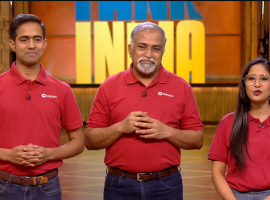
Sharks Anupam Mittal Roast Chewie’s Slow Lid Opening – “Blinkit Delivery Karke Chala Jata Hai”
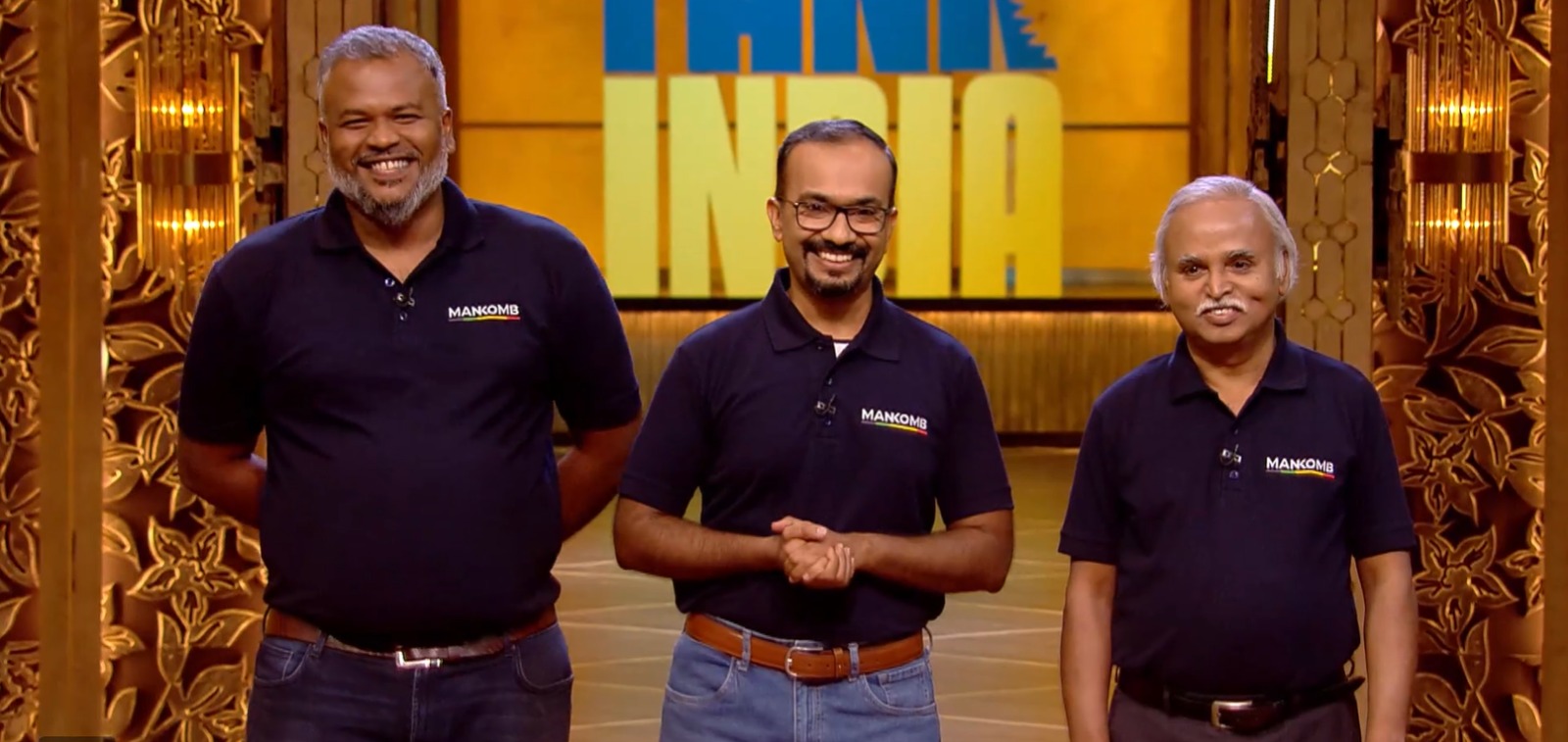
Sharks Anupam Mittal Roast Chewie's Slow Lid Opening – "Blinkit Delivery Karke Chala Jata Hai"

Three points you will get to know in this article:

1. Chewie converts wet kitchen waste into soil within 8-30 hours
2. Founders sought ₹2Cr for 1.5% equity at ₹133.3Cr valuation
3. All sharks rejected deal citing product readiness and market concerns

Sharks Anupam Mittal Roast Chewie's Slow Lid Opening – ``Blinkit Delivery Karke Chala Jata Hai``

It’s not every day you see a product that promises to solve one of urban India’s messiest problems, wet kitchen waste, land on Shark Tank India and still walk away empty-handed. But that’s exactly what happened when Chewie by Mankomb stepped into the tank during Season 5, armed with ambitious plans, Indian patents, and a vision to revolutionise household waste management.

Despite boasting 1,000 pre-bookings and positioning itself as a made-in-India, AI-powered smart appliance, the pitch didn’t quite land the way the founding trio hoped. What followed was a masterclass in tough love from the sharks, complete with brutal one-liners, genuine concerns about scalability, and a reality check on what it truly takes to turn a great idea into a commercially viable business.

What Exactly Is Chewie by Mankomb?

Mankomb Logo

Before we get into the drama, let’s understand what Chewie actually does.

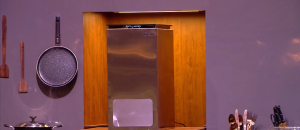
Chewie isn’t your regular kitchen gadget. It’s a smart, automated appliance designed to tackle the age-old issue of stinking, dripping wet waste that piles up in Indian kitchens. Whether it’s leftover biryani, chicken bones, vegetable peels, or fruit scraps, Chewie claims to handle it all.

Here’s how it works:

  • Automated lid: The lid opens automatically when you bring waste close to it. No touching, no mess.
  • Shredding and enzyme processing: Inside, the machine shreds the waste and mixes it with enzymes that accelerate decomposition.
  • Soil output in 8–30 hours: What comes out at the end is compost-like soil that you can use for potting plants or dispose of responsibly.
  • Smart detection: Chewie can even click an internal photo to detect non-organic items and alert you via an app if something that shouldn’t be there gets tossed in.
  • Self-cleaning: The appliance flushes and cleans itself, so you’re never dealing with gunk or grime.
  • Durability: It’s built to last 5–8 years and comes with a 3-year warranty.


The product requires an electricity connection, water inlet, and outlet for flushing. It’s priced at ₹34,999, and the team is working on more affordable variants in the ₹8,000–₹15,000 range, expected within six months.

Sounds pretty futuristic, right? That’s because it is. But futuristic doesn’t always mean market-ready, and that’s where things got tricky.
 

Official Website – Mankomb

Meet the Minds Behind Mankomb

Chewie was brought to life by three co-founders who aren’t exactly newcomers to the startup world:

Mrudul Mudotholy – Co-Founder & CEO

Dinesh Babu Sukumar – Co-Founder & CMO

Jawahar Arumugam – Co-Founder & CTO

The trio met during their time at a previous startup. One ran a business, another served as CTO, and the third brought global corporate leadership experience to the table. Their combined expertise spans engineering, industrial mobility, and product development.

They launched Mankomb in July 2024 with a bold mission: to build the entire home-appliance technology value chain in India. Their focus? Sustainable, cutting-edge tech that’s designed, patented, and manufactured right here. Chewie is just the beginning, they’ve got plans to expand into water and energy management solutions down the line.

It’s a vision that sounds incredible on paper. But as the sharks would soon point out, vision alone doesn’t pay the bills.

The Numbers Behind Chewie – Financials Breakdown

When you’re asking for ₹2 crore on national television, you’d better come prepared with solid numbers. The Mankomb team did bring data, but it wasn’t all sunshine and roses.

Here’s what they shared:

  • Pre-bookings: 1,000 units already pre-booked
  • Gross margin: Around 40% on those 1,000 units
  • Net margin: Currently negative at –27% when SG&A and direct costs are factored in
  • Revenue from bookings: Approximately ₹10 lakh collected in advance booking fees
  • Total spend so far: ₹40 lakh on development, salaries, and infrastructure
  • Team size: Nine members
  • Current MRP: ₹34,999 per unit


They also outlined ambitious growth targets:

  • FY 25-26: 1,000 units
  • FY 26-27: 10,000 units
  • FY 28-29: Expansion into UK markets


The founders made it clear that they’re not yet profitable, but they believe that positive margins will come with scale. The sharks, however, weren’t entirely convinced.

The Shark Tank India Pitch – Big Vision, Bigger Valuation
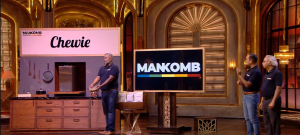
When the Mankomb team walked into the tank, they came with a confident ask:

The Ask: ₹2 crore for 1.5% equity, valuing the company at ₹133.3 crore.

That’s a hefty valuation for a company that’s still in the red and hasn’t shipped a single unit yet. But the founders leaned heavily on their vision, their Indian IP, and the uniqueness of their product.

They emphasised:

  • The growing problem of wet kitchen waste in Indian households, especially in urban areas
  • Chewie’s ability to automate and simplify waste management
  • The fact that it’s 100% made in India, with Indian patents and a locally built value chain
  • Their broader roadmap to create sustainable household solutions for waste, water, and energy


They positioned Chewie not just as a product, but as the first step in a larger movement towards circular, eco-friendly living at home.

On the surface, it sounded compelling. But the sharks had questions, lots of them.

Sharks Reaction to the Pitch

This is where things got spicy. Anupam kicked things off with a hard-hitting question:

“If you look at the West, specifically America, every home has an incinerator installed right under the sink. So you empty your food into that, and the incinerator zaps the food and makes it into soil. The question is, where at installed incinerator number of millions. Why don’t you sell there? Is your product not ready for the market? Because it took five seconds to open. Do you have a chip and processing speed problem? Or do you just feel nationalist? That’s why you’re here first?”

Anupam wasn’t buying the “made-in-India” pitch as a reason to launch domestically first when a massive, proven market existed elsewhere. He questioned whether the product was genuinely ready or if the founders were just being overly patriotic without a solid go-to-market plan.

He ultimately opted out, stating that the company didn’t have sales yet and that the stated purpose wasn’t a real plan.

“Bhai Apka Jab Tak Dhakkan Khulta Hai, Blinkit Delivery Karke Chala Jata Hai”

Sharks Anupam Mittal Roast Chewie's Slow Lid Opening – "Blinkit Delivery Karke Chala Jata Hai"

While Shark Namita was sharing her thoughts on the tech and her reasons for stepping out, Anupam said: “Bhai apka jab tak dhakkan khulta hai, Blinkit delivery karke chala jata hai.”

Translation? “By the time your lid opens, Blinkit has already delivered and left.”

Sharks Vineeta and Kanika Tekriwal Question Market Need

Vineeta and Kanika both pointed out a fundamental issue: selling a ₹35,000 machine to 1 crore households in India is tough when it’s a “nice-to-have” rather than a “must-have.” Both sharks respectfully stepped out.

Shark Aman Sees Potential But Wants Proof

Aman took a slightly softer approach. He acknowledged that the product and the founders had real potential. But he was concerned about execution. His advice? Hire a proper sales team and prove the business model before raising big money.

He wasn’t confident enough in the current state of the company to invest, so he too opted out.

Why Chewie Didn't Get a Deal?

It wasn’t the idea. Everyone agreed that waste management is a real problem and that Chewie is a genuinely innovative solution.

The issue was product readiness, and market fit.

Here’s the breakdown:

  • No actual sales yet: Pre-bookings are great, but they’re not revenue. The sharks wanted proof that customers would actually pay and use the product.
  • Product speed concerns: The slow lid opening became a symbol of deeper concerns about product refinement and user experience.
  • High price point: At ₹34,999, Chewie is expensive for a product that doesn’t solve an urgent need for most households.
  • Unclear go-to-market strategy: The founders had vision, but the sharks felt the execution plan was vague.
  • Negative margins: Losing money on every unit sold is fine in early stages, but without a clear path to profitability, it’s risky.


The sharks weren’t saying “never.” They were saying “not yet.”

What's Next for Chewie and Mankomb?

Despite the rejection, Mankomb isn’t done. The founders are still moving forward with their roadmap. They’re working on more affordable versions of Chewie, expanding their team, and refining the product based on feedback.

They’re also eyeing international markets, particularly the UK, by FY 28-29. And their long-term vision to build a full suite of sustainable home appliances remains intact.

Will Chewie succeed? That depends on whether the team can turn their vision into a scalable, profitable business. The sharks gave them a reality check, but that might be exactly what they needed.

Final Thoughts

Shark Tank India isn’t just about getting funded. It’s about getting real, unfiltered feedback from some of the sharpest business minds in the country.

Chewie by Mankomb may not have walked away with a deal, but they walked away with something arguably more valuable, clarity. They know what needs fixing. They know what the market needs to see before it’ll trust them. And they know that innovation alone isn’t enough.

For now, the lid may open a bit slow, but the team’s determination seems strong. And in the startup world, that counts for something.

Start typing and press Enter to search

Shopping Cart