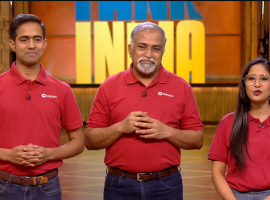
Madrasi Kaapi House Serves Authentic South Indian Coffee on Shark Tank India Season 5 Episode 24

About Madrasi Kaapi House

Madrasi Kaapi House, a QSR (Quick Service Restaurant) coffee brand, was established in 2019 by neighbors turned business partners Venkata Shiva, Simran Venkat, and Smita Rohan Alke with the goal of providing authentic South Indian filter coffee and snacks consistently and quickly. The creators introduced coffee enthusiasts to traditional Indian brewing in a contemporary manner by opening their first store in Mumbai, which has now grown to other locations throughout the city.
The firm, which was founded on a chef-less, process-driven concept, takes pleasure in producing more than 30 different filter coffee-based drinks from a single brew, combining authenticity and adaptability and satisfying changing urban preferences without compromising heritage.
Official Website – Madrasi Kaapi House
The Innovation: Authentic Filter Coffee, Indian-Style
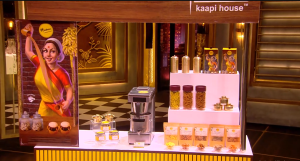
Madrasi Kaapi House distinguishes itself in a market dominated by Western coffee formats like espresso and latte by promoting India’s own filter coffee culture, a deeply ingrained drinking experience cherished for its robust flavor, rich aroma, and cultural heritage.
Beyond coffee, the company offers tasty, reasonably priced options that appeal to both traditionalists and contemporary customers by pairing its brews with South Indian food. In the cutthroat Indian café market, their service strategy places a strong emphasis on speed, price, and consistency.
The Shark Tank India Pitch of Madrasi Kaapi House

The owners opened the pitch by describing Madrasi Kaapi House as a heritage-driven coffee experience that unites modern retail with tradition, rather than just a café. They described how, while being one of the most popular drinks in India, South Indian filter coffee has not received as much attention in the organized café industry as international chains that serve espresso.
They emphasized that:
- The company specializes in genuine South Indian mocha coffee that is made using age-old methods and is consistently provided quickly and with high quality.
- Their locations provide more than thirty different coffee varieties and South Indian delicacies, all of which are made from a single filter brew, which simplifies operations and expands their offering.
- Because the strategy is based on a process-driven, chef-less system, scalability and consistency are incorporated into the business plan rather than being reliant on specific baristas or chefs.
The Ask
With confidence in their concept and traction from existing stores, the founders made their funding proposal crystal clear:
“We are seeking ₹75 lakh in exchange for 5% equity.”
This pitched amount implied an ₹15 crore valuation for the company — a bold ask that signalled confidence in the brand’s growth potential and scalability.
The ask was framed around growth objectives, including:
- Opening additional outlets across major cities.
- Increasing brand awareness through marketing and strategic partnerships.
- Enhancing operations to support a franchise model or broader retail footprint.
Sharks’ Reactions & Questions
Shark Anupam Mittal gave example of Domino’s and Pizza Hut and talked about their market dominance of 75%. He said that it’s all about scaling, which he didn’t see here, therefore opted out.
Shark Namita Thapar showed her concerns of local taste and the inability of local chains to become Pan India by pointing out the closure of 4 outlets of the brand, so she backed out.
Shark Vineeta Singh suggested founders to aim for revenue per outlet to be at least 10-15 lakhs then to think about scaling and funding. Thus, she said no.
Shark Aman Gupta also pointed out the founder’s shortcoming in choosing outlet location and chose not to invest.
Shark Kanika wanted to invest in the potential of Filter coffee to become national interest but she emphasised on the brands lack of vision and focus, therefore she also backed out.
Just like that, everyone gave their verdict and chose not to invest. Madrasi Kaapi House exited Shark Tank without a deal.

- Top AI Photos & Video Platforms For Every User in 2026 - March 24, 2026
- Top AI Startups Helping Indian Armed Forces with Technology in 2026 - March 23, 2026
- Top AI Platforms with the Highest User Bases in 2026 - March 21, 2026