“Glance AI Yeh Sab Karta Hai… Toh Aap Kya Alag Kar Rahe ho?” – Shark Namita’s Savage Reality Check to
Three points you will get to know in this article:
1) How Booon is delivering curated fashion outfits within 2 hours
2) Insights from Shark Namita, Viraj, Varun, Kunal, and Vineeta, including questions on differentiation, team strength & competition,
3) Understanding Booon’s market opportunity, operational strengths, and why, despite a strong concept, none of the sharks invested at this stage.
Booon – A service delivering curated outfits in two hours
Booon has distinguished itself in the market with its innovative idea of “Delivered in 2 Hours.”
This brand is providing customers with lightning-fast delivery by merging fashion with a quick commerce model in today’s digital age, where everything requires instant solutions.
Fashion products typically take 2-3 days for delivery, but Booon asserts its delivery time is only 2 hours. This model has been created with the urban lifestyle in mind.
The concept of delivering within 2 hours is a strong marketing asset as well. This tagline arouses curiosity and enhances brand recall.
About Booon

The central concept of Booon is immediate access to fashion. The brand claims that customers need not wait whenever they require an outfit, accessory, or fashion essential.
Booon’s platform operates through a mobile interface that is easy to navigate, resulting in a quick and seamless shopping experience.
Especially for last-minute plans and urgent provisions, the 2-hour delivery concept can be revolutionary. This service is aimed at the contemporary generation that lives at a fast pace.
Official Website – Booon
Boon’s Hyperlocal Model: Bringing Style to Your Doorstep at Speed

Booon provides a curated selection of fashion items, as stated on the website. This encompasses trending styles, daily wardrobe essentials, and lifestyle-oriented fashion pieces.
The brand concentrates on a limited but quickly moving inventory, enabling instant dispatch. Boon seems to operate on a model that leverages a hyperlocal delivery network. This allows for the product to be delivered to customers from nearby hubs.
Quick commerce is currently a new trend in the fashion industry, and Boon is establishing its position within this segment. Along with groceries and daily essentials, fashion is now being linked to ultra-fast delivery.
Boon’s platform emphasizes straightforwardness and rapidity. The website features a minimal, mobile-friendly layout that facilitates easy navigation. To avoid any delays in placing orders, the checkout process is kept efficient. The brand asserts that the delivery is accomplished within an exceptionally quick timeframe.
From Fulfillment Centers to Front Doors: The Operational Backbone of Boon
This method contributes to raising customer satisfaction. Booon could rely on the hyperlocal delivery model as a crucial element of its operations.
The items are sent out without delay via Nearby Fulfillment Centers.
This significantly cuts down the logistics time. By maintaining an inventory of trendy fashion items, instant availability is guaranteed.
This system belongs to the quick commerce ecosystem.
Boon depends on operations powered by technology. Its backbone can consist of rapid order processing, real-time inventory tracking, and a quick dispatch system.
The focus of the brand is on time efficiency. Website experience shows that the service emphasizes simplicity and speed. This is Booon’s approach to redefining the conventional shopping experience.
In the fashion industry, speed is emerging as a new source of competitive advantage. Boon has boldly embraced the “2 Hours Delivery” concept by acknowledging this trend.
Whereas conventional e-commerce rivals itself based on delivery schedules, Booon zeroes in on super-speedy service.
This method establishes a distinction. The strengthening of Boon’s model can be linked to the growing adoption of quick commerce in the market.
The main target group for Boon consists of people living a fast-paced lifestyle. This service is ideal for college students, young professionals, and those who plan at the last minute.
This model provides a practical solution for fashion emergencies, such as a sudden party invitation or an urgent meeting.
The brand’s speed revolves around communication. This has aligned modern urban culture.
Financial Highlights of Booon
Gross Merchandise Value (GMV)
- Sep’25 – Rs 4 Lakhs
- Oct’25 – (Projected) – Rs 6.5 Lakhs
- Sep'25
- Oct'25
The Shark Tank Pitch on Booon
Original Ask – Rs 1 Crore for 2% Equity
Valuation – Rs 50 Crores
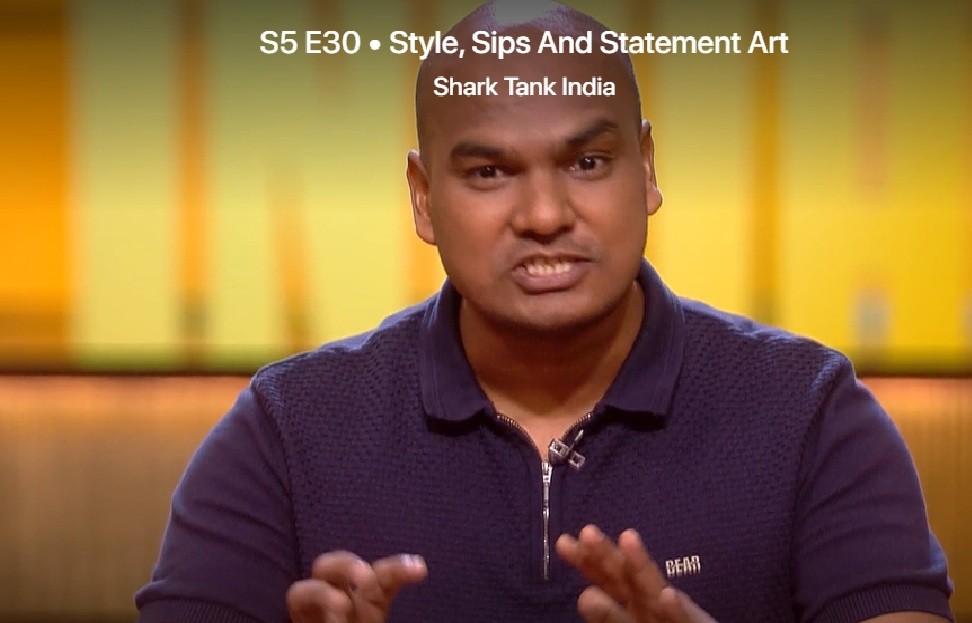
During the pitch, Shark Tank India shark Namita Thapar chose not to invest, primarily due to concerns around clarity in the business model and differentiation.
Curation as the Core Motive
The brand positioned curation as its primary strength, focusing on a selected range of trendy and fast-moving fashion items. However, while curated offerings add convenience, curation alone may not be a strong enough differentiator in a highly competitive fashion market where multiple platforms already provide filtered and trend-based selections.
Speed as a Challenge
Although the brand emphasized rapid delivery through a hyperlocal model, speed in fashion commerce presents operational complexities. Maintaining real-time inventory accuracy, managing fulfillment centers efficiently, and ensuring consistent last-mile delivery can become major execution challenges. Speed, while attractive, must be sustainable and scalable to create long-term value.
Lack of a Clear Value Proposition
A key concern appeared to be the absence of a sharply defined value proposition. It was unclear what truly set the brand apart — whether it was pricing, exclusivity, delivery time, brand partnerships, or customer experience. Without a compelling and clearly communicated unique selling point, the business risks blending into the broader quick commerce ecosystem rather than standing out within it.
During the pitch on Shark Tank India, Viraj Bahl decided to opt out of the deal. His decision was primarily based on the belief that the founder was still at a very early stage of the business journey and that the financial metrics did not yet justify an investment.
Founder at an Early Stage
Viraj expressed concern that the business was still in its formative phase. While the idea may have shown potential, the execution, scale, and operational maturity appeared to be underdeveloped. For investors, early-stage ventures without proven scalability or stability often present higher risk.
“Numbers Don’t Lie” – Performance Concerns
A key factor in his decision was the company’s financial performance. Revenue figures, margins, growth rate, or unit economics did not demonstrate strong traction or sustainability. Investors typically rely heavily on data-driven validation, and in this case, the numbers did not sufficiently support the growth narrative.
Overall, Viraj’s exit reflected a cautious investment approach—prioritizing measurable performance and proven traction over early-stage vision alone.
Why Shark Varun Didn’t Invest in the Business
Varun decided not to invest in the business at this stage primarily due to the absence of a strong and well-structured team. While the core idea shows significant potential and could scale into a large and profitable venture, execution plays a critical role in turning vision into reality.
A capable team is essential for driving operations, managing growth, solving challenges, and sustaining long-term success. Without the right people in place to execute the strategy, even the most promising opportunities can struggle to reach their full potential.
Varun believes that once a competent and committed team is formed, the business could evolve into a major success story. The concept has strong fundamentals and market potential — it simply requires the right leadership and operational strength to unlock its true value.
Why Shark Kunal Declined the Business Opportunity
Kunal appreciated the strength of the business concept, especially its clear understanding of the core pillars of e-commerce — assortment, price, and convenience. The point of view behind the idea is well thought out, and the strategic direction makes sense in today’s competitive digital landscape.
However, despite recognizing its potential, Kunal decided not to move forward. The primary reason is that he has already invested in another venture operating within the same space. To avoid conflict of interest and overexposure in a single category, he chose to pass on this opportunity.
His decision reflects portfolio discipline rather than a lack of confidence in the idea. With the right execution and positioning, the business still holds strong growth potential.
Shark Vineeta’s Take on Fabulous Fashion
Vineeta found the concept of Fabulous Fashion fabulous and recognized its appeal in the market. However, she expressed caution regarding the short-term competitive landscape. Within the next 12 months, major players like Myntra and other established platforms are likely to enter or expand aggressively in this space, creating intense competition.
She highlighted that this will likely trigger a funding battle, making it challenging for new entrants to secure resources and scale rapidly. While the idea is strong, the timing and competitive pressure make it a high-risk environment in the immediate term.
As none of the sharks were interested in investing in the business the founder of Booon had to leave empty handed
Conclusion on Booon
Booon Fashion merges convenience, accessibility, and immediacy. The website-based ordering process provides customers with a stress-free experience. The promise of quick delivery is an effort to establish trust in the brand.
Booon can become a disruptive force in the fashion segment if operational efficiency is upheld. Instant fashion access could turn into a mainstream trend in the near future.
Booon Fashion’s Delivered in 2 Hours is a pioneering quick commerce idea that aims to revolutionize fashion shopping.
- “Glance AI Yeh Sab Karta Hai… Toh Aap Kya Alag Kar Rahe ho?” – Shark Namita’s Savage Reality Check to - February 14, 2026
- “Your Entire Brand is a Distraction” – Vineeta to 3 Sisters on Shark Tank India S05 Episode 30 - February 14, 2026
- MeMeraki’s Gets a 4 Sharks Deal – “I Want All 4 Of You to Come Together” on Shark Tank India Season 5 Episode 30 - February 14, 2026