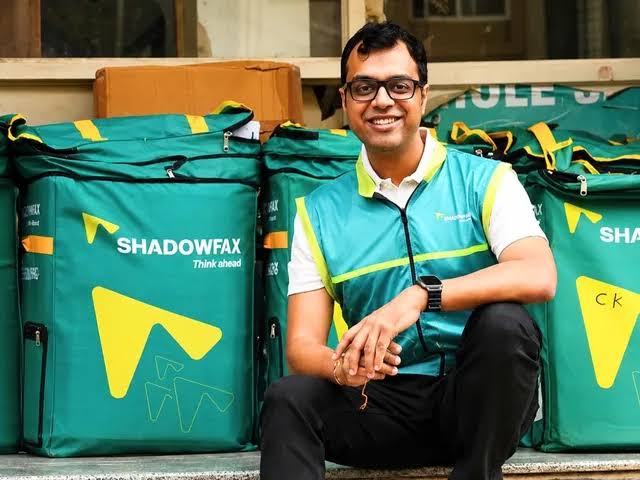
Shadowfax’s early investor Qualcomm Ventures sells Rs 157 crore stake, taking total sales to Rs 341 crore
Three points you will get to know in this article:
- Why Qualcomm Ventures divested Shadowfax shares valued at ₹157.28 crore.
- How the two transactions raised Qualcomm’s total share sales to ₹341 crore.
- What Shadowfax’s financial results and expansion plans indicate about its growth.
Qualcomm Ventures has sold Shadowfax shares worth ₹157 crore, bringing its total stake sales to ₹341 crore amid robust business growth.
Qualcomm Ventures Offloads ₹157 Crore Stake in Shadowfax
Qualcomm Ventures, an early backer of logistics firm Shadowfax Technologies, has sold shares valued at ₹157.28 crore in an open-market transaction. This latest transaction represents the investor’s second significant stake sale in the company within less than two months.
Bulk deal data from the Bombay Stock Exchange (BSE) shows that Qualcomm Asia Pacific Pte Ltd, a US-based Qualcomm affiliate, sold around 57.13 lakh shares on October 12, 2026. The shares amounted to a 0.98% holding in Shadowfax and were sold at an average price of ₹275.30 each.
After the latest transaction, Qualcomm’s cumulative share sales in Shadowfax have risen to approximately ₹341.13 crore. The development occurs as the logistics company continues broadening its services across e-commerce, quick commerce and direct-to-consumer (D2C) businesses.
How Qualcomm’s Two Stake Sales Added Up to ₹341 Crore
Qualcomm’s most recent transaction comes after an earlier stake sale on August 21, 2026. In that transaction, the investor sold 75 lakh Shadowfax shares for about ₹183.85 crore.
Together, the two transactions represent approximately ₹341.13 crore in share sales. Here is a detailed breakdown of the transactions.
| Transaction | Shares Sold | Sale Value |
| August 21, 2026 | 75 lakh | ₹183.85 crore |
| October 12, 2026 | 57.13 lakh | ₹157.28 crore |
| Total | Approximately 1.32 crore | ₹341.13 crore |
At the end of June 2026, Qualcomm owned a 2.26% stake in Shadowfax. The combined number of shares sold in the two transactions corresponds to that reported holding. Consequently, the deals indicate that Qualcomm may have sold its entire previously disclosed stake. However, the company’s next shareholding disclosure will help establish whether it still owns any shares.
Why Does the Stake Sale Matter?
Significant share sales by early investors often draw attention because they may indicate a shift in investment strategy. However, selling a stake alone does not prove that an investor has lost confidence in a company.
In this case, the transactions occurred after Shadowfax was listed on the stock market in January 2026. The sales also took place as the company reported substantial growth in revenue and profit.
The available deal data does not identify the buyers or clarify Qualcomm’s reasons for selling. Therefore, the transaction should be regarded as an investor share sale rather than definitive evidence of a judgement about Shadowfax’s future performance.
Qualcomm Ventures’ Early Investment in Shadowfax
Qualcomm Ventures invested in Shadowfax in 2018, when the logistics startup joined a $22 million Series C funding round led by NGP Capital. Mirae Asset and existing investor Eight Roads Ventures were among the other investors in that round.
The investment provided Qualcomm with exposure to India’s expanding logistics and technology-enabled delivery market. Shadowfax subsequently broadened its services to assist businesses requiring dependable delivery and fulfilment solutions.
Over time, the company developed a logistics network serving e-commerce platforms, quick-commerce operators and D2C brands. Its operations address various delivery needs, including transporting orders from sellers to customers and enabling faster fulfilment.
Qualcomm’s latest share sale shows how an early investor’s involvement may evolve as a startup expands, goes public and moves into a new phase of its business journey.
Other Investors Are Selling Shadowfax Shares Too
Qualcomm is not the sole investor to have reduced its stake in Shadowfax. TPG-backed NewQuest Asia Fund IV has likewise sold shares in several bulk transactions over the past few months.
On October 6, 2026, NewQuest sold 40 lakh Shadowfax shares for about ₹114.8 crore. Previous transactions included share sales during August and September. These transactions were part of a broader trend of existing investors lowering their stakes after the company’s stock market debut.
What Do These Investor Share Sales Signify?
Investors may sell shares for various reasons, including portfolio rebalancing, liquidity needs, or the chance to realise returns. However, the precise reasons for these transactions have not been confirmed.
It is also important to differentiate between an investor selling existing shares and a company raising fresh capital. In an open-market stake sale, the proceeds go to the selling shareholder. The transaction does not automatically bring new funds into Shadowfax.
Therefore, the recent sales alone do not indicate any change in Shadowfax’s operational performance or financial position.
Shadowfax Announces Robust Revenue and Profit Growth
Despite the sale of investor stakes, Shadowfax has reported significant financial growth. In the first quarter of financial year 2026–27, the company posted a consolidated net profit of about ₹65.4 crore, up from approximately ₹8 crore in the same quarter of the previous year.
Revenue from operations rose approximately 64.9% year-on-year to ₹1,358 crore in the quarter ended June 30, 2026. The company also recorded an improvement in adjusted EBITDA, indicating stronger operational performance.
These results matter because logistics companies compete in a market where delivery volumes, network efficiency and cost management affect profitability.
What Factors Are Fueling Shadowfax’s Growth?
Several elements underpin Shadowfax’s business model:
- E-commerce deliveries: Online retailers require reliable delivery networks to fulfil customer orders throughout India.
- Quick commerce: Rising expectations for faster delivery are driving greater demand for efficient local fulfilment and last-mile logistics.
- D2C brands: Direct-to-consumer companies depend on logistics partners to deliver products to customers without maintaining their own extensive delivery networks.
- Network expansion: Expanding its delivery network can enable a logistics company to serve more locations and customers.
Although these factors present opportunities for growth, future performance will depend on effective execution, cost management and sustained demand.
Shadowfax Broadens Its Logistics Network Throughout India
Established in 2015 by Abhishek Bansal and Vaibhav Khandelwal, Shadowfax offers third-party logistics services to e-commerce, quick-commerce, and D2C companies.
By June 2026, the company’s network extended across 16,372 pin codes in India and comprised 5,095 operational touchpoints. During the first quarter of FY27, it added 716 pin codes, demonstrating its ongoing emphasis on geographic expansion.
Shadowfax is additionally enhancing its quick-commerce capabilities by expanding its dark-store network. These facilities process and dispatch online orders, enabling businesses to fulfil customer requests more efficiently.
As of June 30, 2026, Shadowfax operated 47 dark stores in six metropolitan cities. The company aimed to operate at least 100 dark stores in FY27, which concludes in March 2027.
This expansion may enable Shadowfax to support a larger number of quick-commerce and online retail businesses. However, the long-term advantages will depend on whether the added capacity produces adequate order volumes and operational efficiency.
What Qualcomm’s Stake Sale Signals for Shadowfax’s Future
Qualcomm Ventures’ sale of a ₹157.28 crore stake represents another major development in Shadowfax’s progress as a publicly listed logistics company. Including its August transaction, the investor has sold shares valued at roughly ₹341.13 crore.
Meanwhile, Shadowfax continues to report business growth and broaden its delivery network. The company’s latest financial results indicate increased revenue and profit, while its investments in quick-commerce infrastructure suggest additional opportunities in the logistics sector.
Investors and market observers are likely to monitor the company’s forthcoming financial results and shareholding disclosures. These updates could offer greater insight into its operating performance and the degree of change in its investor base.
Ultimately, the central question is whether Shadowfax can maintain its growth and remain profitable in a competitive logistics market. Qualcomm’s exit appears to signal a shift in its investment position, but Shadowfax’s long-term prospects will depend mainly on its business performance and execution.
- Toothsi parent MakeO raises Rs 90 crore led by Singularity AMC to expand in India, Southeast Asia - October 14, 2026
- Shadowfax’s early investor Qualcomm Ventures sells Rs 157 crore stake, taking total sales to Rs 341 crore - October 14, 2026
- Ayurvedic brand Nat Habit raises Rs 142 crore in funding led by Trident Growth Partners - October 13, 2026