Can Nuclear Fusion End the LPG Crisis? Inside the Indian Startup Building an Artificial Sun.

Can Nuclear Fusion End the LPG Crisis? Inside the Indian Startup Building an Artificial Sun.
Three points you will get to know in this article:

1. Bengaluru startup Pranos Fusion is developing “artificial sun” technology to provide limitless clean energy.

2. The project aims to end India’s LPG crisis and fossil fuel dependency by the late 2030s.

3. India’s participation in the global ITER project provides a unique manufacturing edge for this fusion revolution.

India’s ``Artificial Sun``: How a Bengaluru Startup Aims to Solve the Energy Crisis

In a quiet laboratory in Bengaluru, a team of ambitious engineers is working on a project that sounds like science fiction: recreating the power of the stars on Earth. Pranos Fusion, a deep-tech Indian startup, is at the forefront of developing nuclear fusion technology—a breakthrough that could permanently end India’s dependence on fossil fuels and solve the recurring LPG crisis.

Related: Indian AI Startup Sarvam Achieves $1.5 Billion Valuation, Secures Funding

he Holy Grail of Clean Energy

Nuclear fusion is often called the “holy grail” of energy. Unlike current nuclear fission plants, which split heavy atoms (like uranium) and produce long-lived radioactive waste, fusion does the opposite. It mimics the Sun by fusing light hydrogen isotopes together to release staggering amounts of energy.

The advantages are transformative:

  • Carbon-Free: Zero greenhouse gas emissions.
  • Limitless Fuel: Uses hydrogen isotopes readily available in seawater.
  • Safety: No risk of a “meltdown” like traditional nuclear plants.

Pranos Fusion: From Theory to Engineering

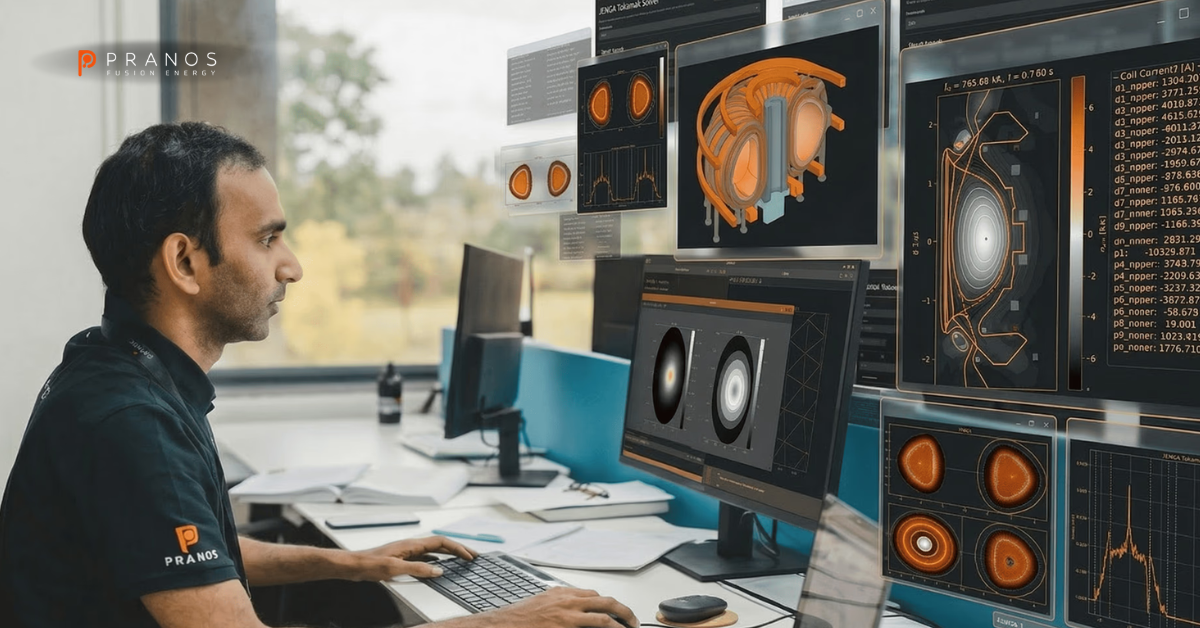
The startup’s strategy is a “modular” approach. Rather than building a massive reactor immediately, they developed Jenga, a sophisticated software platform used to design and control fusion environments. This was followed by the creation of Pragya, a mid-scale tokamak—a doughnut-shaped device that uses powerful magnetic fields to confine superheated plasma.

While Pragya is a subcritical system (designed for data collection rather than net power output), it serves as a crucial stepping stone. By utilizing high-temperature superconducting magnets, Pranos aims to build reactors that are smaller, cheaper, and more efficient than traditional designs.

Solving the LPG and Power Crisis

India’s energy landscape is currently vulnerable to global price volatility. Rising LPG costs and fuel shortages directly impact millions of households. If Pranos succeeds in its goal to build a full-scale 50–100 megawatt reactor by the 2030s, the implications would be profound.

By providing a base-load of cheap, clean electricity, fusion could power an all-electric domestic infrastructure. From induction cooking to electric vehicles, the reliance on imported gas and oil could vanish. Furthermore, fusion reactors require very little land compared to solar farms and can be situated closer to urban centers, reducing transmission losses.

Why India has an Edge

Interestingly, India is uniquely positioned to lead this race. As a member of the International Thermonuclear Experimental Reactor (ITER) project in France, India has already cultivated a robust domestic manufacturing ecosystem. Major Indian firms are already experienced in building high-precision components for global fusion experiments, giving startups like Pranos a head start in the supply chain.

The Road Ahead

The journey isn’t without hurdles. Sustaining a fusion reaction requires temperatures hotter than the core of the Sun, and challenges like tritium supply and high initial costs remain. Experts estimate that while early fusion power might cost ₹6 to ₹8 per unit, prices will plummet as the technology scales—much like solar energy did over the last decade.

As the world races toward “Net Zero,” Pranos Fusion is proving that the “Artificial Sun” isn’t just a dream—it’s a Bengaluru-made reality that could light up India’s future.

Start typing and press Enter to search

Shopping Cart