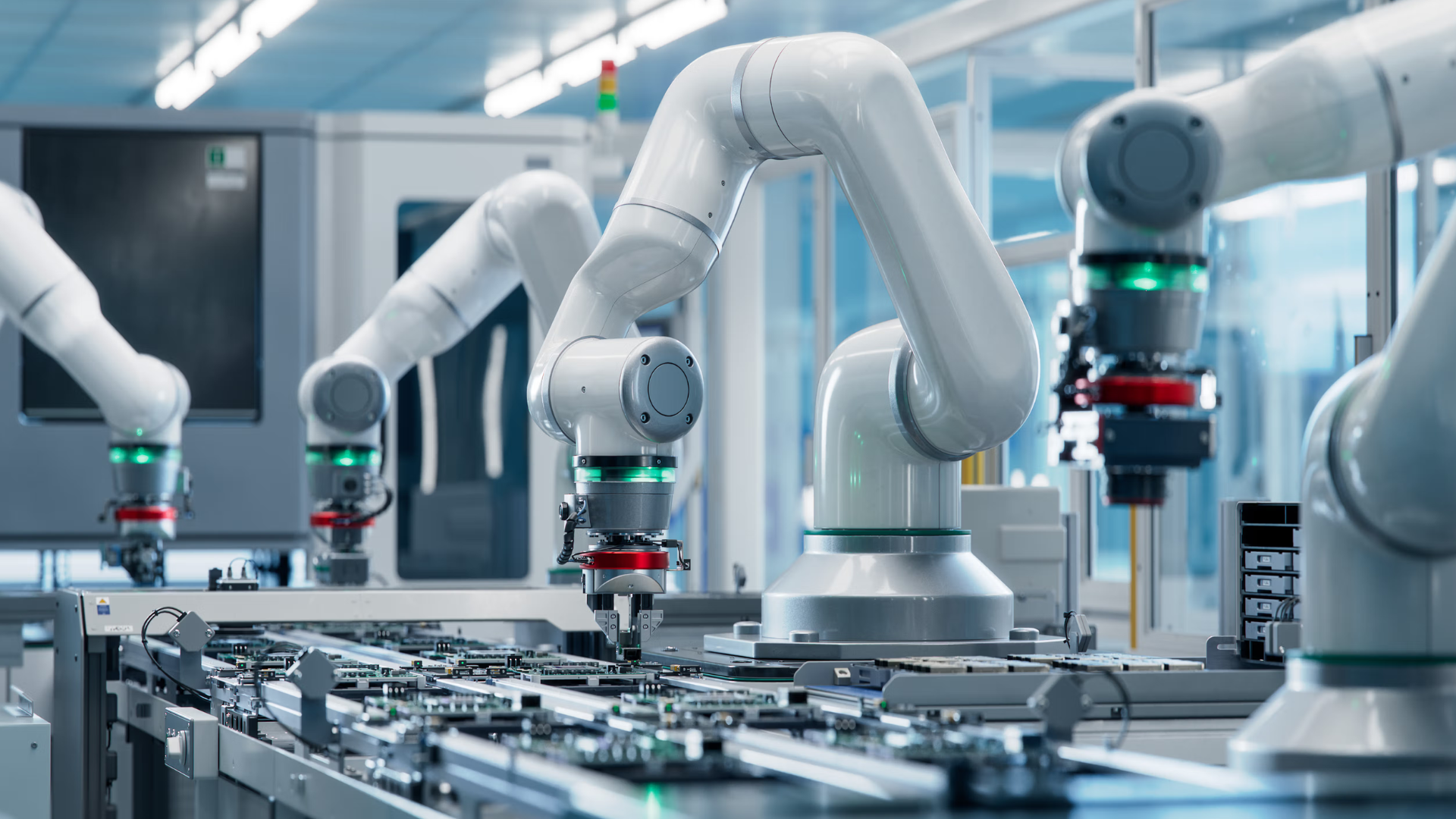
AI Startup Integral AI Expands into Japan to Revolutionize Industrial Robotics and Intelligent

AI Startup Integral AI Expands into Japan to Revolutionize Industrial Robotics and Intelligent

Three points you will get to know in this article:

1. How Integral AI is combining advanced artificial intelligence with Japan’s robotics industry to transform global manufacturing.

2. Why major companies like Toyota, Sony, and Honda are exploring AI-powered robotics for smarter factory automation.

3. How self-learning robots could perform complex tasks by observing demonstrations and responding to simple language commands.

Former Google AI Researcher Launches AI Robotics Startup in Tokyo to Transform Global Manufacturing

The global robotics industry is entering a new era driven by advanced artificial intelligence, automation, and machine learning technologies. A groundbreaking development in this space comes from Integral AI Inc., a Silicon Valley–founded startup that is now focusing its expansion efforts in Japan. Established by former Google researchers Jad Tarifi and Nima Asgharbeygi, the company is working to revolutionize how robots learn, adapt, and perform complex tasks across manufacturing environments.

With Japan already dominating the industrial robotics supply chain, Integral AI aims to combine cutting-edge artificial intelligence with world-class robotics engineering. This strategic move positions the company to reshape how factories operate and how intelligent machines evolve in the coming decade.

Japan’s Robotics Leadership Meets Next-Generation AI Innovation

Japan has long been recognized as a global powerhouse in robotics engineering and industrial automation. The country hosts some of the largest robotics manufacturers in the world, making it an ideal environment for AI-driven robotic innovation.

Japanese companies collectively supply nearly 29% of the global industrial robot market, according to industry data. Major corporations such as Fanuc Corporation, Yaskawa Electric, Mitsubishi Electric, and Kawasaki Heavy Industries continue to lead in factory automation technologies. These companies have built highly advanced robotic systems used in automotive assembly lines, electronics manufacturing, and precision engineering.

However, while Japan excels in hardware manufacturing and robotics engineering, the integration of advanced artificial intelligence models into robotic systems remains an emerging opportunity. Integral AI’s strategy focuses on filling that gap by developing AI models capable of teaching robots new tasks through observation and minimal data.

This approach could fundamentally change how industrial robots operate in factories worldwide.

Integral AI’s Vision: Robots That Learn Like Humans

Integral AI’s technology focuses on developing machine learning systems inspired by the human brain’s neocortex, which is responsible for learning, memory, and decision-making. Founder Jad Tarifi, who previously launched Google’s first generative AI research team in 2013, believes this biological inspiration is essential for building smarter and more adaptable machines.

Traditional industrial robots require extensive programming and rigid instructions to perform tasks. Integral AI’s goal is different. The company aims to create self-learning robotic systems that can observe demonstrations and independently replicate tasks.

In practice, this means a human operator could simply instruct a robot with a natural language command such as “make a coffee” or “assemble this component.” The robot would then analyze demonstrations, understand the objective, and perform the task without requiring detailed coding.

This type of autonomous robotic learning has the potential to dramatically reduce training time for machines and make automation accessible to a wider range of industries.

Partnerships with Major Japanese Manufacturing Companies

Through this partnership, Integral AI has been developing AI systems that allow industrial robots to learn new skills by observing human demonstrations. Instead of programming robots step-by-step, engineers can simply demonstrate the desired action and allow the AI system to convert the demonstration into robotic behavior.

Beyond Denso, Integral AI is currently in discussions with several major Japanese corporations, including:

  • Toyota Motor Corporation
  • Sony Group Corporation
  • Honda Motor Company
  • Nissan Motor Company
  • Mitsui Chemicals


These discussions highlight growing interest in AI-powered manufacturing automation as companies search for ways to improve efficiency, flexibility, and production scalability.

The Rise of Physical AI and Intelligent Automation

One of the most important trends shaping the robotics industry today is the concept of physical AI—the integration of artificial intelligence directly into machines that interact with the physical world.

Unlike purely digital AI systems used in chatbots or data analysis, physical AI focuses on robots that perceive, reason, and act within real environments. Integral AI’s models are designed to support this transformation by enabling robots to learn continuously without forgetting previously acquired knowledge.

This capability addresses one of the biggest challenges in machine learning known as catastrophic forgetting, where AI systems lose earlier knowledge when learning new tasks. Integral AI’s research focuses on building architectures that allow robots to retain past skills while acquiring new ones, similar to how humans learn over time.

Such developments could unlock a new generation of intelligent machines capable of performing complex activities across industries.

Start typing and press Enter to search

Shopping Cart