“Nobody Made an Offer Except Me” – Anupam to Circato on Shark Tank India Season 5 Episode 51
About Circato
One of the biggest contributors to carbon emissions both locally and internationally, India’s construction sector is being transformed into a greener, more resource-efficient future by Circato, an inventive sustainable construction company. The circular economy, which emphasizes developing buildings and structures in a way that minimizes waste, maximizes resource efficiency, and lessens the environmental impact of construction, is reflected in the company’s name.
One of the most important sectors for climate intervention in India is the building industry, which accounts for about 22% of the nation’s total CO2 emissions. Conventional building techniques mostly rely on cement, clay bricks, and reinforced concrete, all of which need a lot of energy to make, produce a lot of waste, and have a large carbon footprint over the course of their lives. In light of this, Circato was established to provide a sustainable, scientifically developed substitute without sacrificing affordability, speed, or structural integrity.
At a time when India is investing trillions of rupees in housing and infrastructure through programs like the PM Awas Yojana, Smart Cities Mission, and the National Infrastructure Pipeline, the company offers a compelling value proposition by combining sustainable materials, energy-efficient construction techniques, and circular design principles to deliver buildings that are not only greener but also quicker to construct and more economical over time.
Official Website – Circato
The Problem Circato Is Solving
India’s construction industry is one of the largest in the world — and one of the most polluting. Consider the scale of the challenge:
- Cement production alone accounts for approximately 8% of global CO₂ emissions.
- Construction and demolition waste constitutes nearly 25–30% of total solid waste in Indian cities.
- Conventional construction methods are slow, labour-intensive, and resource-inefficient — with significant material wastage at every stage.
- India needs to build hundreds of millions of new homes and commercial structures over the next two decades to keep pace with urbanisation and population growth.
The intersection of these two realities — massive construction demand and an urgent need for environmental sustainability — creates a once-in-a-generation opportunity for startups like Circato that can offer credible, scalable sustainable construction alternatives.
The Shark Tank Pitch of Circato

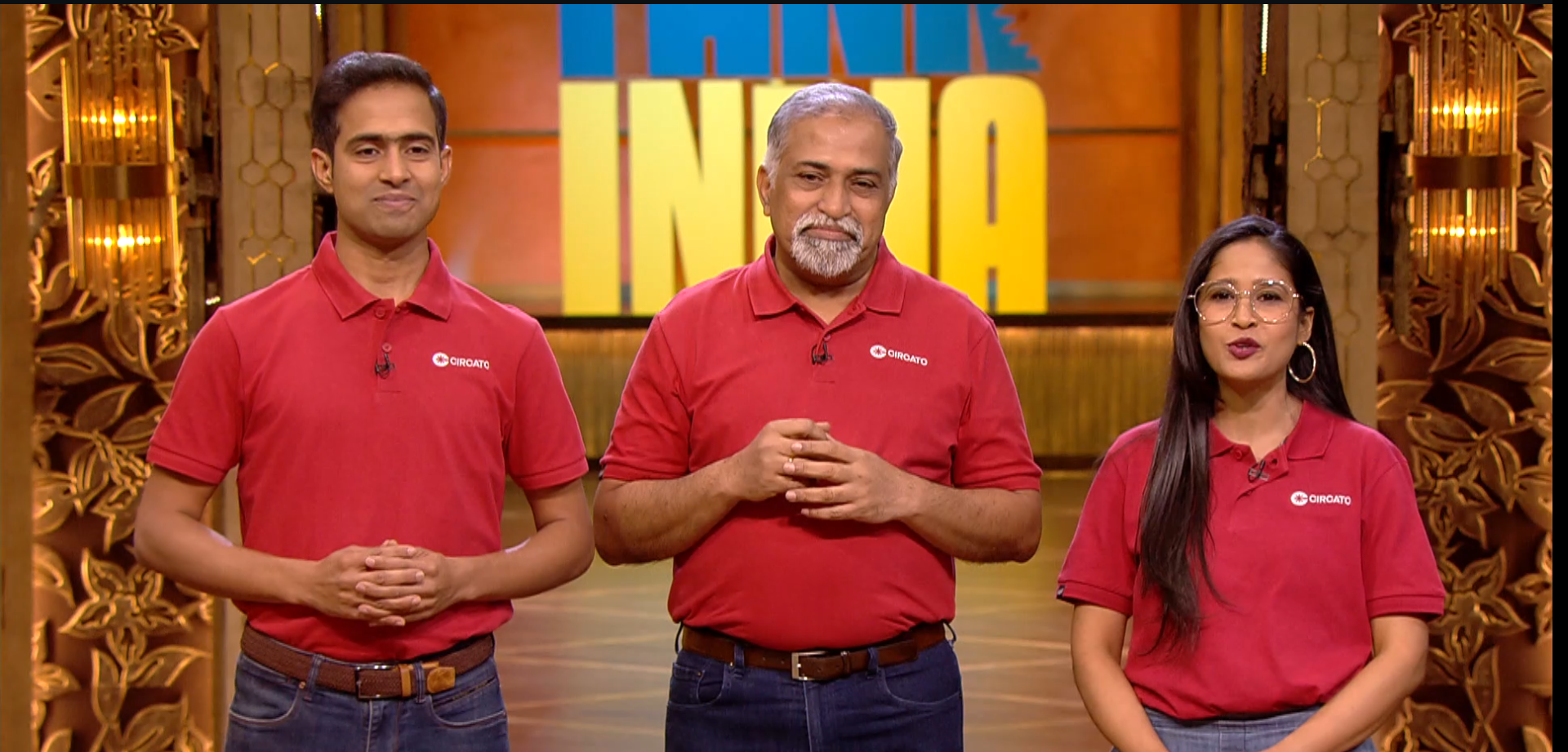
On Shark Tank India Season 5 Episode 51, Circato’s founder or founders entered the Tank with a proposal that was both urgent and ambitious. Circato was the most capital-intensive and infrastructure-heavy of the three in an episode titled “Ecopreneurs in the Tank,” along with Green Avartan, a sustainable waste management startup, and Dharti Amrit, a forest creation initiative. Circato brought with it the biggest potential market opportunity as well as the most difficult questions regarding scalability and execution.
One of India’s largest contributions to carbon emissions is construction, yet very little of the country’s building boom is occurring responsibly, according to a depressing figure that was shown at the beginning of the presentation. The founders portrayed Circato as a business that has figured out how to make sustainable construction profitable, not as a high-end choice for buyers who care about the environment, but as a truly competitive option that is quicker to construct, less expensive in the long run, and better for the environment.
The magnitude of the market—India’s construction sector is valued at trillions of rupees and is only expected to increase—engaged the Sharks right away. However, they also put a lot of pressure on the execution side: How does Circato stand out from the other prefab and environmentally friendly construction firms that are now active in India? How much does it cost in compared to traditional construction? Are people, developers, or governmental organizations the intended clients? Most importantly, how can an industry that is still very fragmented, relationship-driven, and change-resistant grow?
The creators addressed these queries with clarity, citing Circato’s circular economy strategy, sustainable building materials and techniques, and an expanding pipeline of projects as proof that the market is prepared for a reliable substitute for traditional building.
The Ask
The original ask was Rs 90 Lakhs for 3% equity at the valuation of Rs 30 Crores.
Sharks Reactions
Shark Aman pointed out that the brand does not have Product Market Fit, sales. He found it risky to invest, thus backed out.
Shark Namita could not see a cost savings strategy by the founders. She opted out stating that.
Shark Kunal mentioned Price-Performance Point which the brand has yet to identify. Hence, he also backed out.
Shark Hardik also doubted the limited use-case of the brand’s products while also showing concerns about the pre-revenue status. He was also out.
Shark Anupam Mittal, however, offered the founders – Rs 90 Lakhs for 10% Equity at the valuation of Rs 9 Crores subject to technical due diligence + a contract that funds 1 year of operations.
Founders tried giving a counter offer which Anupam Mittal refused stating that his offer is non-negotiable.
Final Deal

Founders accepted Shark Anupam Mittal’s offer– Rs 90 Lakhs for 10% Equity at the valuation of Rs 9 Crores subject to technical due diligence + a contract that funds 1 year of operations. Hence, deal was made.