“Toone Aake Tamasha Kiya Yahan Pe” – Anupam to Kalakrit Founder on Shark Tank India Season 5
About Kalakrit
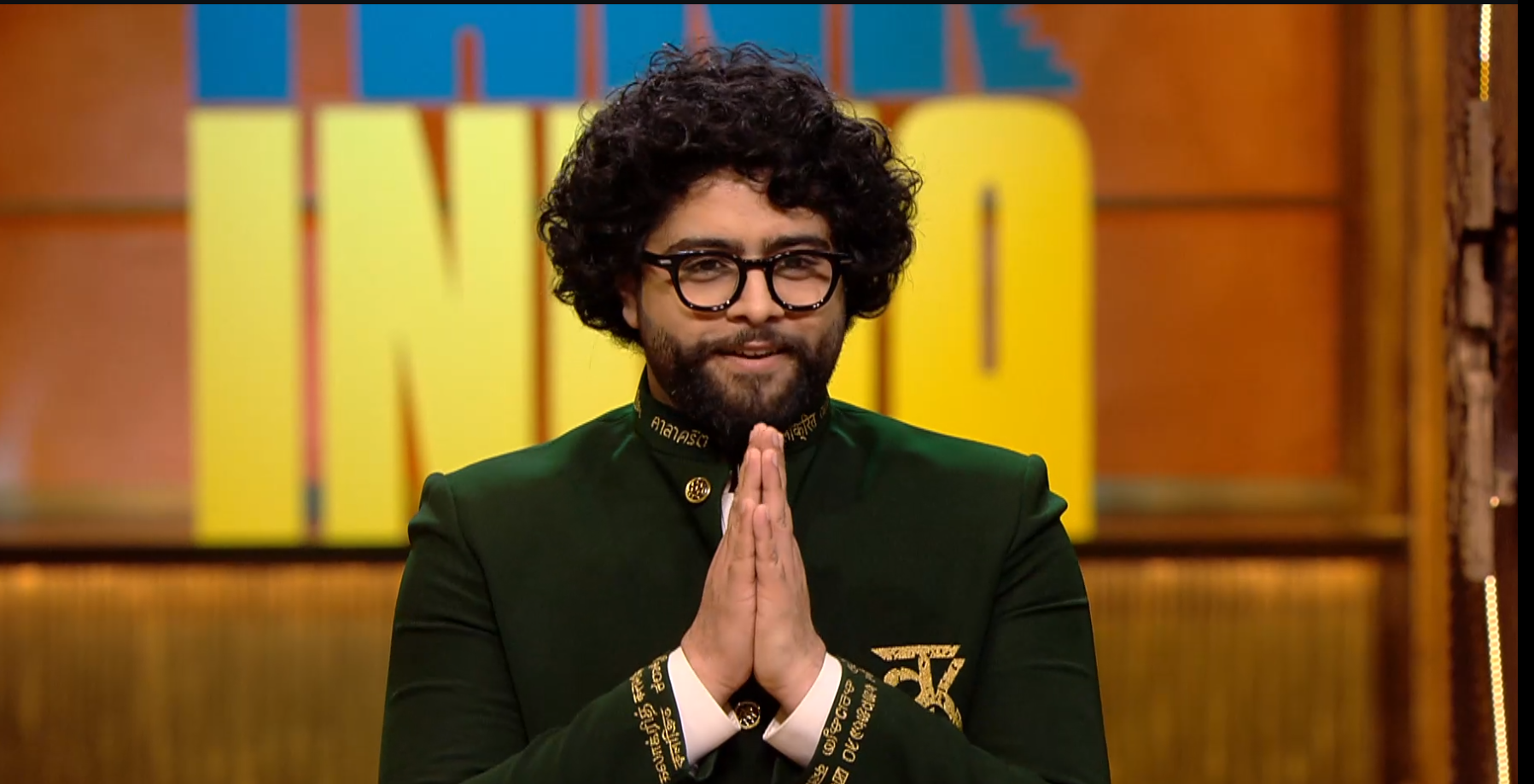
Sehaj Kohli founded Kalakrit in 2021 with the goal of assisting companies in entering new markets by adapting their material to be more linguistically and culturally appropriate. In contrast to typical translation, which merely translates words from one language to another, Kalakrit’s method concentrates on deep localization, which involves modifying messaging to appeal to local sensibilities.
Colloquial language, voiceovers, cultural signals, and even imaginative interpretations as opposed to literal translation can all be used in this situation.
Kalakrit, which has its headquarters in Delhi, has established itself as a brand development partner for businesses looking to connect with consumers in India’s multilingual market. The company targets audience segments in regional and international markets with marketing campaigns, instructional content, voice-overs, dubbing, subtitles, and other media localization services.
Official Website – Kalakrit
Kalakrit’s Innovation & Product Offering

The main innovation of Kalakrit is its proficiency in content transformation, which goes beyond simply translating text to make it seem natural to viewers across India’s numerous states and regions. The startup uses cultural intelligence in conjunction with a human-centric approach to localize:
- Marketing and advertising content
- E-learning materials
- Websites and digital campaigns
- Voice-overs & dubbing
- Subtitles and creative adaptations
Kalakrit prioritizes high-quality human localization over machine translation, making sure that every piece of material has emotional and cultural resonance for the target audience. For clients growing into tier 2, tier 3, and regional markets, this strategy improves brand recall and conversion rates.
Kalakrit Pitch on Shark Tank India

The founders of Kalakrit’s pitch stood out as soon as they entered the tank because it addressed a challenge that all developing brands inevitably encounter: how to successfully connect across India’s enormous language variety. They presented Kalakrit as a cultural localization business rather than merely another translation service.
The founders clarified that cultural subtleties, regional phrases, and emotional context are frequently missed by simple translation. They claimed that Kalakrit helps marketers establish stronger bonds with audiences by transforming material so that it feels natural rather than converted. The Sharks were immediately drawn to this distinction.
A number of Sharks questioned Kalakrit’s ability to expand beyond relying solely on human capital. They looked into customer acquisition tactics, business structure, and if automation or technology affected delivery. In response, the founders emphasized their quality-driven human expertise model, contending that cultural sensitivity is necessary for localization and that machines cannot supply it on their own.
Concerns about competition were also voiced by some Sharks. They questioned what keeps customers from choosing less expensive automated solutions when AI-driven translation tools are advancing so quickly. In response, the founders reaffirmed Kalakrit’s positioning as a high-end localization partner rather than a generic translation service provider.
The Ask
Ask: ₹1 Crore for 10% Equity
Valuation: ₹10 Crores
Sharks Reactions
Shark Mohit Yadav pointed out the that the business might be profitable but it’s “Not Investible” thus he backed out.
Shark Kanika applauded founder’s salesman skills, however she did not see good value proposition in the business. She also backed out.
Shark Kunal Bahl could not see any product differentiation in the business, thus he opted out as well.
Shark Anupam Mittal called out the poor quality of pitch which was full of entertainment but no substance. He did not offer anything.
Shark Aman Gupta hesitated on investing 1 crore in a sector which is rapidly changing with future uncertainty. He opted out too.
Just like that, every Shark backed out and the founder had the exit Tank without any deal.