“2.5 Crore Mein 5 Business Aise Nahi Kardoon?” Aman to EzPac on Shark Tank India Season 5 Episode 33
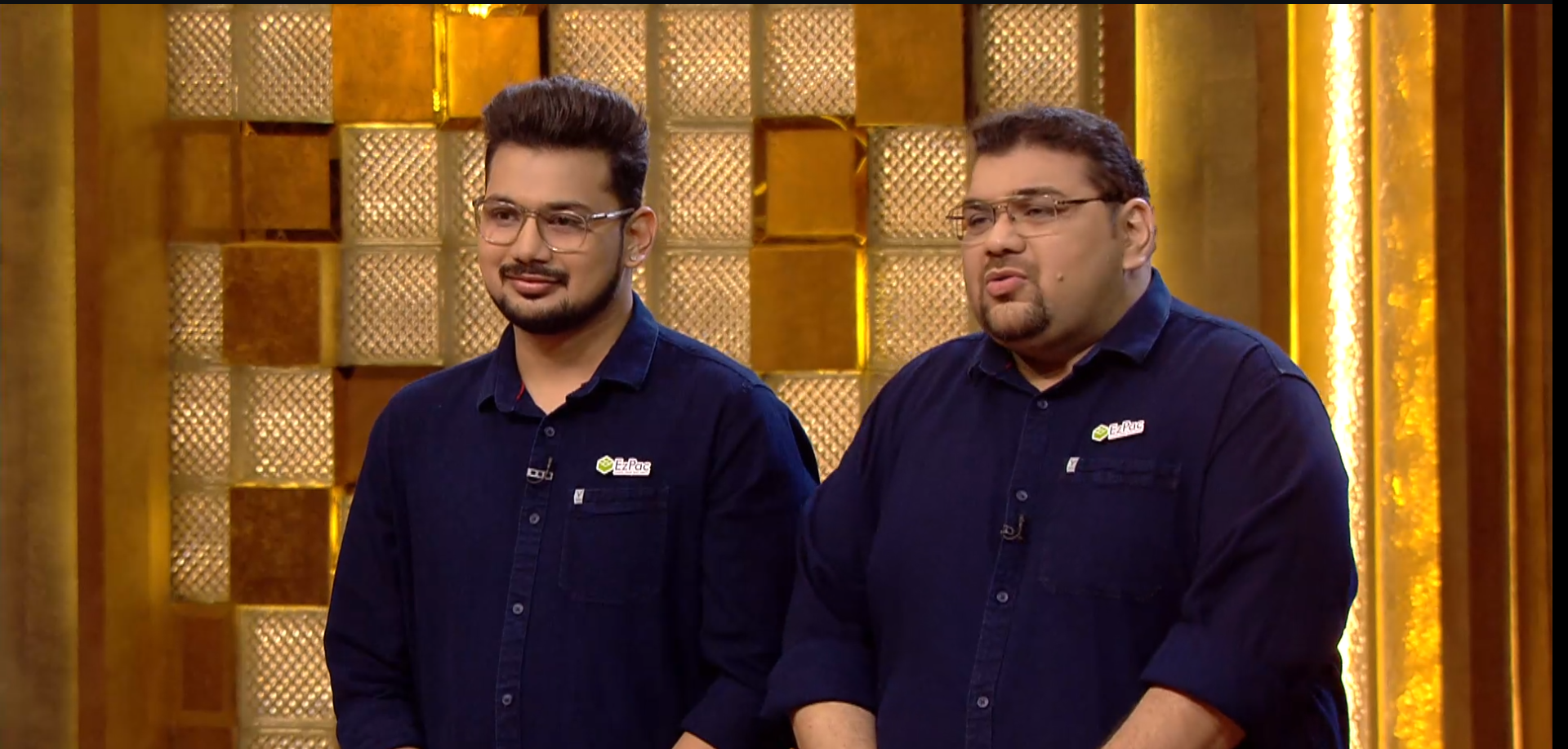
About EzPac
EzPac is a packaging-as-a-service platform that was founded in 2023 and has its headquarters in Mumbai. Its goal is to make bespoke packaging accessible and affordable for companies of all sorts, from established MSMEs to tiny innovators and local brands. The entire ordering process is made simpler by its online system, which incorporates 3D design tools, quick pricing, and cheap minimum order quantities (MOQs as low as 10 pieces). This strategy breaks down obstacles that have long prevented small businesses from purchasing superior packaging, which is often saved for larger purchases.
Fundamentally, EzPac gives companies the ability to plan, envision, and purchase anything from labels, tags, and marketing materials to custom printed boxes and courier bags—all from an easy-to-use platform that lowers expenses and expedites turnaround.
Official Website – EzPac
The Innovation: Redefining Packaging for the Modern Brand
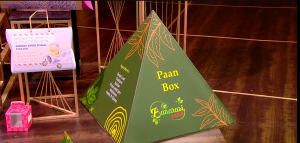
Packaging serves as a brand’s initial impression in addition to protecting a product. The platform of EzPac recognizes this by providing:
- Low MOQs starting at just ten units, making quality packaging achievable for even the smallest ventures.
- 3D design visualization, enabling users to see their packaging before production begins.
- Instant pricing and online ordering, eliminating back-and-forth with printers and traditional vendors.
- A variety of personalized goods that assist firms in visually communicating their narratives, such as labels, paper bags, gift boxes, and mailer boxes.
EzPac has established itself as a scalable link between internet commerce and high-end physical branding thanks to its combination of accessibility, technology, and customer control.
Business Model & Market Position
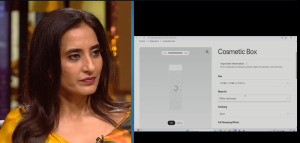
EzPac operates in the B2B and B2C segments, primarily catering to small and medium enterprises, direct-to-consumer brands, e-commerce sellers, and creative entrepreneurs by solving key pain points such as:
- High minimum order quantities from traditional printers
- Long turnaround times
- Lack of real-time pricing and design tools
By offering low MOQ (starting at 10), digital design tools, and fast delivery, it positions itself as a bridge between modern branding needs and practical manufacturing processes.
The Shark Tank Pitch of EzPac
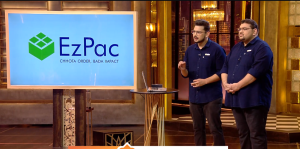
The EzPac founders boldly entered the Tank and presented an issue that all contemporary brands can relate to: excellent packaging is costly, time-consuming, and out of reach for small enterprises. They described how entrepreneurs and innovators are forced to either overspend or make compromises on branding due to the high minimum order numbers demanded by established packaging suppliers. Relevance was immediately established by this opening, especially in a time when customer experience is crucial for D2C brands.
The entrepreneurs moved into traction and validation as the pitch went on, emphasizing their increased revenue and better financial results. Instead of just showing projections, they highlighted how actual users of the platform, including MSMEs, small D2C brands, and creators, were already utilizing it. This proved that instead of chasing a speculative opportunity, EzPac was addressing a real market inefficiency.
The Sharks’ inquiries naturally focused on scalability, margins, and unit economics. Since the packaging sector is typically thought of as being margin-sensitive, the founders needed to make it clear how EzPac’s business strategy stays clear of frequent problems. They described how utilizing technology, combining demand, and streamlining manufacturing processes allow for both client affordability and corporate profitability.
Competitive advantage was another important topic of discussion. The Sharks looked into what stops bigger markets or packaging companies from adopting EzPac’s strategy. In support of their claim that execution complexity, not simply concept, creates their moat, the founders here drew on their technological platform, customer experience, and operational integration.
The Ask
The founders asked for Rs 2.5 Crores for 5% Equity at the valuation of Rs 50 Crores.
Sharks Reactions
Shark Aman said that “math is not mathing” here as he questioned the amount of money asked by the founders, thus he opted out.
Shark Namita called the industry cluttered with already plenty of players and investing Rs 2.5 Crores is a big risk, she also backed out.
Shark Vineeta pointed out how vendors in packaging industry operates at such low margins to win orders, she suggested founders to shift 100% to online business. She also opted out.
Shark Ritesh advised the business to focus on one strategy either B2B or B2C to play on their pricing advantage and improve margins, but the business today lacks scaling. Thus, he did not offer anything.
Shark Kunal called the industry as “Leaky Bucket Business” and also chose not to invest.
The founders were unable to secure any deal and had to exit Shark Tank empty handed.

- Grand Success of Seminar on “Income Tax Act, 2025” in Hyderabad – ICMAI - April 1, 2026
- Runway Rolls Out $10 Million Fund Alongside Builders Program for Emerging AI Ventures - April 1, 2026
- Wonderful AI Achieves 80% Containment Rate for Global Call Centers via New $150M Funding Boost - April 1, 2026