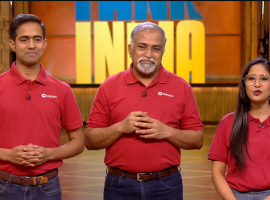
Avishkaar on Shark Tank India Season 5 Episode 4 – Robotics Meets Education, But No Deal Sealed
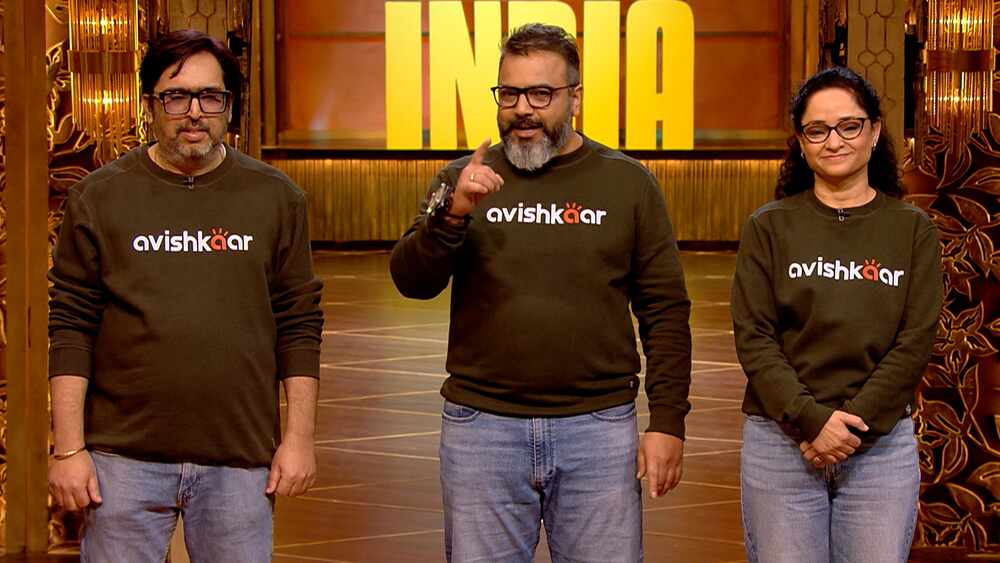
Avishkaar on Shark Tank India Season 5 Episode 4 - Robotics Meets Education, But No Deal Sealed

Three points you will get to know in this article:

1. Avishkaar provides robotics kits, AI modules, and screen-free coding tools to over 100,000 learners and 1,500 institutions.
2. The company transitioned from a loss in FY23 to a ₹2.31 crore profit in FY25 , seeking a valuation of ₹80 crore.
3. Despite praising the technology, Sharks declined to invest due to the aggressive valuation, high capital intensity, and slow institutional sales cycles.

On Shark Tank India Season 5 Episode 4, Avishkaar Founders Made Strong Pitch

Founders from a range of cutting-edge companies, from smart plant technology to healthy eating, entered Shark Tank India Season 5 Episode 4 with lofty goals and audacious aspirations. However, Avishkaar, a STEM robotics firm that aims to make science and technology approachable and engaging for children, was one pitch that attracted attention for its combination of deep-tech innovation and pedagogical impact.

The difficulties tech-heavy education businesses have in an investor market that is typically geared toward fast-scaling consumer brands are highlighted by the fact that Avishkaar left the Tank without a contract despite demonstrating excellent traction and a clear objective.

About Avishkaar

Avishkaar-logo

Founded over a decade ago by Tarun Bhalla, Yogita Bhalla, and Rajeev Gaba, Avishkaar positions itself at the intersection of STEM education and hands-on learning. The company builds thoughtfully designed robotics kits, coding platforms, and AI-powered educational tools that aim to ignite curiosity and build technical skills among children aged roughly 5 to 15 years.
Avishkaar’s product ecosystem includes:
• Tweak, a screen-free coding system based on logic blocks
• Robotic kits like Mars Rover and Butler robots
• AI modules and coding platforms for deeper engagement

Through these, the startup targets schools, innovation labs, and direct consumers interested in building future-ready tech skills for kids.


Checkout the company website here: Avishkaar

Innovation & Product Overview

What makes Avishkaar stand out is its hands-on, experiential approach to learning. Rather than rote theory, students build and program physical robots, intuitively learning logic, sequencing, and computational thinking — all while having fun.

Key highlights of Avishkaar’s technology:

  • Screen-free coding experience with tangible logic blocks
  • Progressive learning phases (14 levels with diverse combinations)
  • Widely adopted across schools and training centers in India and internationally


The startup claims to have reached over 100,000 learners and set up 1,500+ robotics labs in institutions across multiple countries.

Financials of Avishkaar

Avishkaar’s financial picture, as shown on the show and enhanced by estimations made available to the public, revealed a developing but still young company:

Historical Financials (as shared on Shark Tank India):

FY23: ₹7.63 crore revenue with ~₹44 lakh loss

FY24: ₹10.36 crore revenue with ~₹57 lakh profit

FY25: ₹13.36 crore revenue with ~₹2.31 crore profit

Other Financial Highlights:

Total Funding Raised: ~$1.78 million (~₹14–15 crore) across multiple early rounds

Annual Revenue Estimate: ~$100K–$5 million USD (indicative range seen in startup databases)

Profitability: Turning modest profits in recent years, but with tighter margins typical for an ed-tech product + hardware business

The Shark Tank Pitch of Avishkaar

Avishkaar’s founders established a tone of authenticity and purpose as soon as they entered the Tank in Season 5, Episode 4, portraying their company as a mission-driven STEM revolution for kids rather than just another ed-tech firm.

In order to change education from passive screen-based consumption to active experiential learning, they presented Avishkaar as a firm developing interactive robotics, artificial intelligence, and coding learning solutions for children. The creators described how youngsters may touch, construct, explore, fail, and learn using their physical kits, logic blocks, and programmable robots, simulating the way actual engineers and scientists work.

The Ask

The entrepreneurs asked for:

₹80 lakh for 1% equity, Valuing the company at ₹80 crore.

Sharks’ Reactions & Key Questions

The Sharks appreciated:

  • The depth of technology
  • The social and national importance of STEM education
  • The founders’ long-term commitment and domain expertise


However, they raised sharp questions around:

Scalability

  • How fast can school partnerships grow?
  • Can this model scale like consumer startups?

Sales Cycle

  • Institutional sales are slow and relationship-driven.
  • How will you accelerate adoption across India?

Margins

  • Hardware + curriculum + training = high cost structure.
  • How defensible and profitable is this in the long run?

Valuation Justification

  • At ₹80 crore valuation, the Sharks expected hyper-growth visibility.
  • They questioned whether current revenues and expansion speed supported that number.

Negotiation Outcome

While the Sharks admired the vision, product quality, and educational impact, they felt:

  • The valuation was too aggressive
  • The business model was complex and capital-intensive
  • The scaling risk was higher than typical consumer brands


Despite respect for the founders and the mission, none of the Sharks were comfortable matching the ask or making a counter-offer that would align with the founders’ expectations.

What’s Next for Avishkaar?

Even though Avishkaar left the Tank without receiving any investment, the exposure it received and the insight it garnered from investor input may help it refine its strategic priorities. There is still a sizable demand for educational resources that connect classroom theory with practical creativity since STEM and digital literacy are becoming more and more valued in India’s educational system.

Moving forward, the team may focus on:

  • Strengthening unit economics
  • Streamlining sales processes with schools and institutions
  • Expanding product reach into direct consumer segments
  • Exploring global classroom partnerships


The Avishkaar pitch on Shark Tank India Season 5 Episode 4 was a daring demonstration of how innovation and education can come together to create a compelling product suite that combines robots, coding, and practical learning. The founders’ journey illustrates the opportunities and difficulties faced by ed-tech and deep-tech firms in today’s market, even if they were unable to get financing on the show.

Start typing and press Enter to search

Shopping Cart