Nearly 50% of our team is working remotely: Snapdeal, Zomato cut office attendance amid rising pollution
Three points you will get to know in this article:
- Why Snapdeal and Zomato’s parent company Eternal have cut back on in-person office attendance.
- How the directive requiring 50% work-from-home applies to offices in Delhi-NCR.
- How worsening air pollution is reshaping workplace policies and steps to keep employees safe.
Snapdeal and Zomato’s parent company Eternal are cutting down on office attendance, as pollution in Delhi-NCR pushes companies toward hybrid work arrangements.
Snapdeal and Zomato Adopt Hybrid Work as Pollution Levels Climb
Companies are rethinking their workplace setups as air pollution continues to rise across Delhi-NCR. Businesses including e-commerce firm Snapdeal and Eternal, which owns Zomato and Blinkit, are among those that have cut back on physical office attendance following government directives.
Snapdeal confirmed that around 50% of its employees are working remotely from November 5 to November 13, 2026. The company stated that it would reassess further arrangements based on government guidance.
Eternal, in the meantime, has limited physical attendance at its Gurugram office to 50%. The step comes after directions from the Gurugram district administration, as authorities roll out measures to curb pollution during the winter season.
Such changes show that deteriorating air quality is affecting more than just public health. It is also shaping business operations, employee commutes and office attendance throughout the National Capital Region (NCR).
What Is Prompting Companies to Cut Back on Office Attendance?
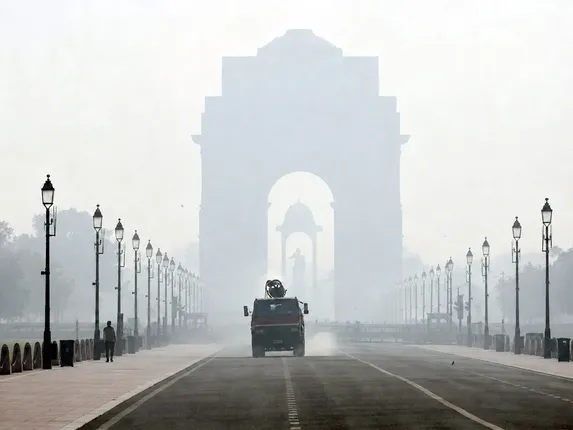
During the winter months, Delhi-NCR sees air pollution rise again and again. Poor air quality can be made worse by a mix of low wind speeds, weather patterns, vehicle emissions, construction dust and seasonal burning.
As pollution levels climb, the daily commute turns into an added worry for employees. More cars on the road can increase emissions tied to traffic. Authorities are therefore urging companies to cut down on the number of employees who travel to offices.
As part of its pollution-control measures, the Commission for Air Quality Management (CAQM) set a 50% cap on physical attendance. The directive requires government and private offices in Delhi and five adjoining NCR districts to ensure that no more than half of their employees work from the office between November 5 and November 20, 2026. The rest of the employees must work from home.
The measure is intended to cut emissions linked to daily commuting while also helping to limit employees’ exposure to polluted outdoor conditions.
What Is Stated in the 50% Work-from-Home Directive?
The CAQM directive applies to Delhi along with five adjacent districts in Haryana and Uttar Pradesh.
Below is a breakdown of the locations covered:
| Region | Districts Covered |
| National Capital Territory | Delhi |
| Haryana | Gurugram, Faridabad and Sonipat |
| Uttar Pradesh | Ghaziabad and Gautam Buddha Nagar (Noida) |
As per the order, organizations are required to cap in-office attendance at 50% of their workforce. During the stated period, the rest of the employees must work remotely.
The directive additionally grants exemptions to industrial establishments and essential services in cases where remote work is not practicable.
For how long will these restrictions remain in effect?
The CAQM’s specific directive spans from November 5 to November 20, 2026.
Yet Delhi has its own separate arrangement as part of its winter pollution action plan. Offices in the national capital, both government and private, have been instructed to keep physical attendance at a maximum of 50% from November 1, 2026, to January 31, 2027.
This means companies have to comply with the instructions that apply to them, depending on where their offices are located and the relevant government orders.
How Snapdeal and Eternal Are Putting the New Rules into Practice
Businesses are adopting various workplace setups in order to comply with the attendance restrictions.
1. Snapdeal Permits Close to Half of Its Staff to Work Remotely
Between November 5 and November 13, the e-commerce platform Snapdeal has rolled out remote work for almost 50% of its employees.
The company stated that any further decisions would be based on guidance from the government. This arrangement lets employees keep working while cutting down on the number of people commuting to the office.
Snapdeal’s announcement also shows how companies are changing their working arrangements in response to seasonal pollution concerns.
2. Eternal Caps Attendance at Its Gurugram Office
Eternal, the operator of the popular platforms Zomato and Blinkit, has also limited in-person attendance at its Gurugram office to 50%.
The company is following the directives issued by the Gurugram district administration. This change impacts the company’s office attendance arrangements for as long as the pollution-related restrictions stay in effect.
The step carries particular significance since Gurugram is a key corporate and technology hub in the NCR region.
3. Spinny Also Embraces a Hybrid Work Model
Following the government circular, used-car marketplace Spinny has put in place a 50% work-from-home arrangement.
Founder Niraj Singh confirmed that the company rolled out the arrangement right after receiving the official instructions.
These examples demonstrate that the pollution situation is impacting companies across various industries, including e-commerce, food delivery and online automotive marketplaces.
Not Every Company Is Making the Switch to Work From Home
Although a number of businesses have cut back on office attendance, others are opting for different approaches to safeguard their employees.
Moglix, a B2B commerce platform, has kept its offices running as usual. The company stated that its workplaces are equipped with air purifiers and other measures intended to keep the indoor environment comfortable.
Rahul Garg, its founder and CEO, said that employee health and safety continue to be key priorities. The company will keep reviewing its arrangements as air quality conditions and official guidance evolve.
This contrast underscores an important point: how workplaces respond depends on the nature of business operations, office infrastructure and the relevant government instructions.
Nevertheless, companies subject to mandatory attendance restrictions must follow those directions, even if they have indoor air filtration systems in place.
Air Pollution in Delhi-NCR Hits Alarming Levels
These workplace adjustments are being made as air quality across Delhi-NCR continues to worsen.
On November 10, 2026, the 24-hour average Air Quality Index (AQI) in Delhi stood at around 390, which falls in the Very Poor category. Multiple monitoring stations also registered readings above 400, placing them in the Severe category.
The AQI indicates how polluted the air is and how it may affect health. Higher readings mean more pollution and greater health risks.
Below is a simplified breakdown of the AQI categories used in India:
| AQI Range | Air Quality Category |
| 0–50 | Good |
| 51–100 | Satisfactory |
| 101–200 | Moderate |
| 201–300 | Poor |
| 301–400 | Very Poor |
| 401–500 | Severe |
When AQI levels stay elevated, breathing polluted air can harm people’s respiratory health and overall well-being. Children, older adults, and individuals with existing respiratory or heart conditions may be at greater risk.
As a result, cutting down on unnecessary time outdoors and heeding official health advisories become especially important during periods of severe pollution.
Why does winter pollution impact Delhi-NCR year after year?
Several factors contribute to winter pollution in Delhi-NCR. These sources can merge and produce conditions that hold pollutants near the ground.
1. Low Wind Speeds
In winter, pollutants may be unable to disperse quickly when wind speeds are low. Consequently, smoke, dust, and vehicle emissions can stay concentrated over populated areas.
2. Vehicle Emissions
Delhi-NCR is home to a large number of private vehicles, commercial vehicles, and delivery fleets. The emissions from these vehicles add to urban air pollution.
Cutting down on daily office commuting could help reduce some transport-related emissions, but by itself it cannot solve the region’s broader pollution problem.
3. Dust from Construction and Roads
Poor air quality is also worsened by dust from construction, demolition, and roads. During the designated pollution-control period, authorities across the NCR have imposed limits on demolition and outdoor construction activities that generate dust.
4. Seasonal Burning of Agricultural Waste
During particular periods, the burning of agricultural residue in nearby areas can increase the pollution burden. After that, weather conditions can stop pollutants from dispersing effectively.
Together, these factors turn winter air pollution into a complicated problem that calls for coordinated action.
How Growing Pollution Is Reshaping Workplace Culture
The most recent restrictions demonstrate that environmental conditions can have a direct impact on how companies structure their teams.
Remote and hybrid work setups are turning into practical choices during times of severe pollution. These arrangements can help employees avoid needless commuting while letting businesses keep running their operations.
A number of workplace adjustments may become more widespread during pollution emergencies:
- Flexible working hours: Where permitted, employees may travel outside peak traffic periods.
- Remote working: Teams can carry out suitable tasks from home.
- Virtual meetings: Online meetings can cut down on the need for unnecessary office visits.
- Carpooling: Employees who travel to the office can share rides in the same vehicle.
- Indoor air quality measures: Companies can enhance ventilation and install appropriate air filtration systems.
Still, these measures are most effective when companies also comply with official pollution-control guidance.
For employees, clear communication about attendance schedules and remote working expectations matters just as much.
What Does This Imply for Businesses and Employees?
This situation creates difficulties for both employers and employees.
For companies, lower physical attendance may call for adjustments to team schedules, office operations and coordination. Businesses that serve customers directly or depend on specific locations may also need to plan carefully to sustain productivity.
For employees, working remotely can cut down on commuting time and exposure to outdoor pollution. However, they also require dependable internet access, appropriate workspaces and consistent communication with their teams.
Companies must therefore strike a balance between business continuity and employee well-being.
The restrictions also highlight how important flexible workplace policies are. Organisations that can adapt quickly may find it easier to handle unexpected environmental or operational disruptions.
What Comes Next?
As authorities react to deteriorating air quality, Snapdeal, Eternal and other Delhi-NCR companies are revising their office attendance policies.
The present CAQM directive is in effect from November 5 to November 20, 2026, throughout Delhi and five adjacent NCR districts. Firms should keep tracking official guidance and modify their plans accordingly.
Meanwhile, the wider winter pollution problem calls for measures beyond workplace attendance. Improved public transport, emission control, dust management and regional cooperation continue to be vital for enhancing air quality.
In sum, Snapdeal and Zomato’s parent company Eternal cutting office attendance underscores how growing pollution is reshaping corporate work culture. In this situation, the move to hybrid working is not merely a workplace preference. It is also part of a broader effort to cut commuting-related emissions and safeguard employees throughout a tough pollution season.

- Nearly 50% of our team is working remotely: Snapdeal, Zomato cut office attendance amid rising pollution - November 12, 2026
- Prodigi Connect Signs MoU with Lokanima for Animated Content - November 6, 2026
- 44 milliseconds per answer: Sarvam launches an AI decision model faster than Microsoft and Perplexity - November 5, 2026