Cotopay on Shark Tank India: The UPI Voucher Idea That Impressed the Sharks
Three points you will get to know in this article:
● Cotopay raises ₹75 lakh for 3% equity on Shark Tank India
● First Indian platform issuing e-RUPI business vouchers via UPI
● CoWIN architects build expense management solution for enterprises
Cotopay on Shark Tank India Season 5
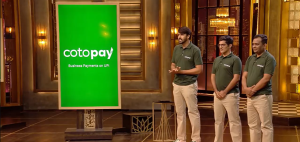
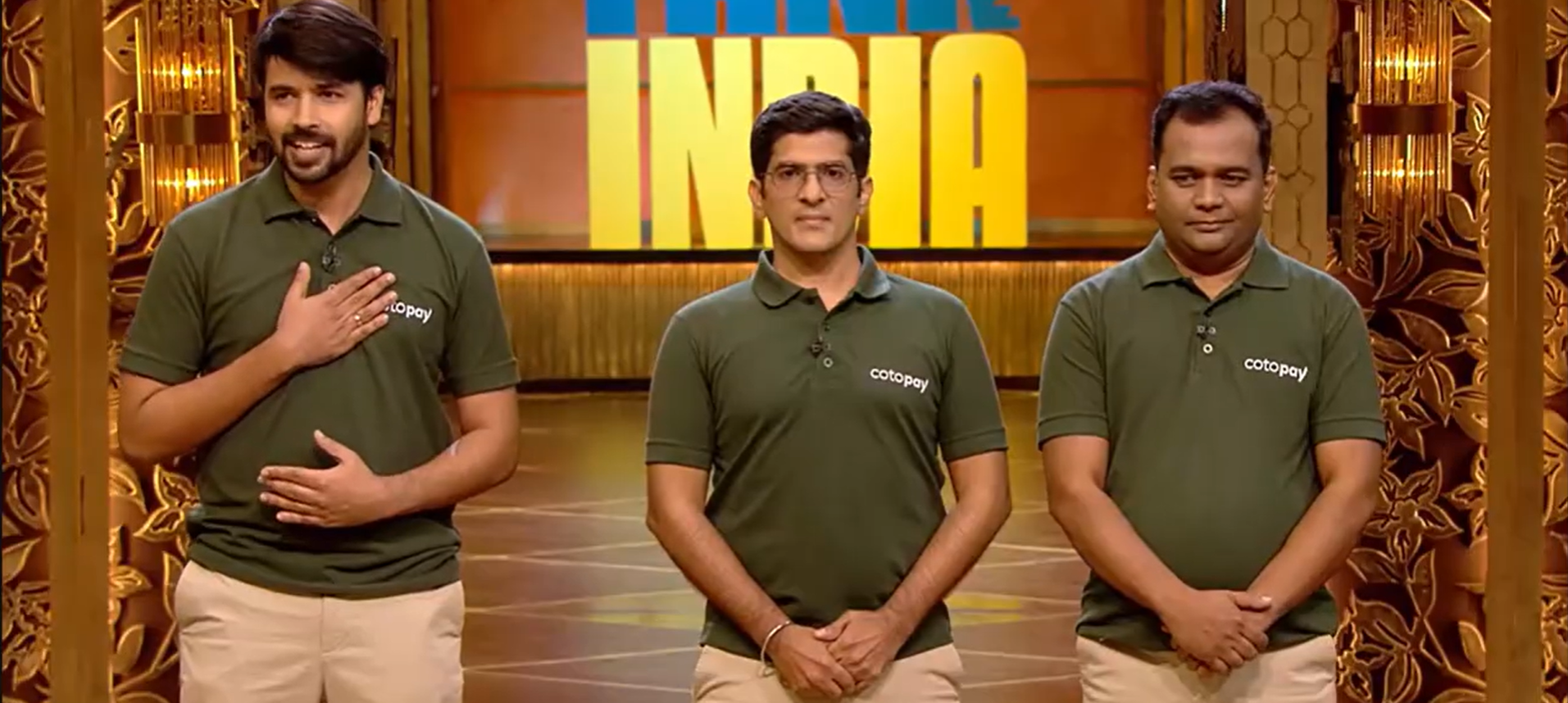
Three guys from Delhi walked into Shark Tank India Season 5 with something no one had seen before, UPI vouchers for business expenses. Aviral Gupta, Vidit Sidana, and Uzair Syed Ahmed weren’t just pitching another fintech app. They were solving a real headache: how do you track where your company’s money actually goes?
The pitch started with a relatable skit. An employee struggles with torn bills, washed receipts, and non-functional expense cards. Sound familiar? That’s exactly what Cotopay fixes.
Their ask was bold: ₹50 lakh for just 1% equity, valuing the company at ₹50 crore right out of the gate.
What Is Cotopay?

Cotopay isn’t your typical payment app. It’s an expense management platform built specifically for Indian businesses, running on e-RUPI vouchers through the NPCI infrastructure.
Here’s how it works:
The Traditional Problem:
- Boss gives ₹5,000 cash to employee
- Money leaves company account immediately
- No control over what it’s spent on
- No visibility into transactions
- Bills get lost, torn, or “washed with clothes”
The Cotopay Solution:
- Boss issues digital UPI voucher to employee’s phone
- Money stays in company’s bank account
- Voucher is locked to specific categories (fuel, meals, travel)
- Time validity can be set (expires after 3 days, for example)
- Real-time tracking with merchant details, bills, transaction IDs
Employees don’t need to download any new app. The voucher just appears in their existing UPI app, PhonePe, Google Pay, Paytm, whatever they already use.
When they need to pay, they simply:
- Open their UPI app
- Scan the merchant’s QR code
- Select the Cotopay voucher option
- Enter UPI PIN
- Done
The company dashboard shows everything, where the money went, when, and for what. Bill attached, no questions asked.
Official Website – Cotopay
The Brains Behind Cotopay
Aviral Gupta – Co-Founder & CEO: Aviral went to school in Dehradun, where he met Vidit. After getting his Master’s in Management from London Business School, he joined BharatPe’s founding team. That’s where he learnt how UPI actually works from the inside.
During COVID-19, Aviral joined the National Health Authority. That’s where the e-RUPI voucher story began. Working on CoWIN and other government digital solutions, he saw firsthand how programmable vouchers could work at massive scale.
Coming from a family of doctors (he’s the only non-doctor), Aviral brings that discipline to building Cotopay.
Vidit Sidana – Co-Founder & CBO: Vidit did his undergrad at SRCC, Delhi University, followed by an MBA from IIM Ahmedabad. He spent 7 years in the consumer sector, most recently as Brand Manager at ITC handling Sunfeast biscuits, a ₹7,000 crore portfolio.
When Aviral explained the e-RUPI voucher concept, Vidit spoke to companies and stakeholders across industries. The pain was real. He quit his stable job to build Cotopay’s business strategy.
Uzair Syed Ahmed – Co-Founder & CTO: Uzair is the tech heavyweight. With over 20 years in software development and architecture, he was part of the initial Aadhaar team. During COVID, the Prime Minister’s Office invited him to design the CoWIN platform.
The sharks reacted instantly: “Aadhaar… CoWIN… Solid assets. These are among the biggest systems for India.”
Then came the sarcastic joke from Aman Gupta:
“Aap teen log itne underachiever ho, kabhi bura nahi lagta?” (You three are such underachievers, don’t you ever feel bad?)
The room burst into laughter. Here were three founders who’d built systems used by over a billion Indians, and the shark was playfully calling them underachievers. The joke landed perfectly, it was a backhanded compliment recognising just how impressive their credentials actually were.
How Does Cotopay Actually Make Money?
Cotopay doesn’t charge per user like typical SaaS companies. Instead, they take a percentage of the total processing volume.
Cotopay Pricing model:
- 5% to 7% of monthly processed expenses
- Custom pricing for large enterprises
- No per-user monthly fees
For example, if your company processes ₹10 lakh in expenses per month, Cotopay charges between ₹50,000 to ₹70,000.
Why this model? Aviral explained on the show: “If you charge per user, a company thinks: I earn ₹10,000 and now I’m spending ₹200 per month just for this. We don’t want to restrict businesses based on cost.”
Cotopay's Funding Journey Before Shark Tank
The founders had already raised money before appearing on the show:
- Amount raised: ₹2.94 crore
- Post-money valuation: ₹22.5 crore
- Equity diluted:8%
- Timeline: One year before the Shark Tank pitch
This earlier round gave them runway to integrate with banks and develop the product. Because here’s the thing, this isn’t just another app. It requires deep banking integrations since the money stays in the company’s bank account until the voucher is used.
Cotopay Equity Split
- Aviral Gupta – Co-Founder & CEO: 45% equity
- Vidit Sidana – Co-Founder & CBO: 35% equity
- Uzair Syed Ahmed – Co-Founder & CTO: 20% equity
Who Actually Needs This Product?
Cotopay targets two main customer segments:
Businesses with distributed spending:
- Event management companies paying hundreds of contractors
- Corporates managing employee allowances
- Any company tired of reimbursement paperwork
Fleet owners:
- Cab companies with 200-300 vehicles
- Truck logistics firms
- Anyone managing driver expenses
The fleet use case is particularly strong. As one founder explained: “Drivers should be able to pay without dependency. Owners should be happy that money stays with them. The money cannot be misused for alcohol, food, or anything else.”
Category locking means a fuel voucher can only buy fuel. A meal voucher can only buy food. Simple.
Cotopay’s Shark Tank India Pitch: What Actually Happened

The demo impressed everyone. The founders showed how vouchers are issued, how purpose-locking works, how real-time tracking captures every transaction.
But the sharks had concerns:
Concern #1 – Market Monetisation How much money can you actually extract from this? What about competition?
Concern #2 – Customer Acquisition Dealing with HR and Admin teams is tough. They’re slow to adopt new systems. The sales cycle is long.
Concern #3 – Competitive Moat What stops Razorpay from building this? They have banking relationships too.
The founders responded smartly. On Razorpay: “To launch this product, you need deep bank integrations. We’re already working with 5 banks. The product-to-market time is long.”
On market size, they pointed to existing players: Sodexo’s India operations run at ₹2,500-3,000 crore. Zolo does ₹1,300 crore annually. The market exists; penetration just hasn’t happened because solutions weren’t convenient.
Sharks Who Offered the Deal
After Aman opted out, citing the difficulty of selling to HR and Admin teams, four sharks stepped forward with offers. The room was about to get competitive.
1) Kunal Bahl’s Offer: ₹50 lakhs for 2% equity
Kunal saw the potential immediately. With fleet companies in his portfolio, he understood the use case perfectly. He gave strategic advice: “Initially don’t take commission. Lower the adoption barrier to zero. Once someone gets used to this product, they won’t leave it.”
2) Anupam Mittal’s Offer: ₹50 lakhs for 2% equity
Anupam brought something extra to the table, his existing portfolio of mobility companies:
- Rapido (bike taxi platform)
- Zingbus (intercity bus service)
- Chalo (public transport app)
He explained that these companies could help Cotopay get started faster by providing strong use cases and early traction. Fleet expenses are a massive pain point for all three.
3) Kanika Tekriwal’s Offer: ₹50 lakhs for 2% equity
Kanika believed the product solves a real problem she faces daily in her own business.
4) Mohit Yadav’s Offer: ₹50 lakhs for 2% equity
Mohit was impressed by the tech capability and the founders’ credentials.
The Counteroffer That Changed Everything
Four identical offers. ₹50 lakhs for 2% equity from each shark.
The founders didn’t accept immediately. They huddled briefly, then made their move:
Counter Offer: ₹75 lakhs for 2% equity
The response was almost instant. Three sharks matched the revised offer, ₹75 lakhs for 2% equity.
The founders now had multiple options at their desired valuation. But they weren’t done negotiating.
Final Counterfffer by the Founders
Instead of choosing one shark, the founders made a strategic move. They asked Anupam Mittal and Kunal Bahl directly:
₹75 lakhs for 2% equity + 1% advisory equity
This meant 3% total equity for ₹75 lakhs, but with both Anupam and Kunal on board, bringing their combined networks, expertise, and portfolio synergies.
Final Deal for Cotopay on Shark Tank India

Both sharks agreed with each other to make a joint deal:
Anupam Mittal + Kunal Bahl
₹75 lakhs for 2% equity + 1% advisory equity
The founders got their desired amount, a stronger valuation than their previous round, and, most importantly, two sharks whose networks could unlock massive distribution.
Anupam’s mobility portfolio (Rapido, Zingbus, Chalo) meant immediate access to fleet expense use cases. Kunal’s payments expertise (first investor in Razorpay) meant deep understanding of the ecosystem and potential partnerships.
Why Did Aman Say “No to Pay for Cotopay”?
Not everyone invested. Here’s why:
Aman opted out early, saying: “Dealing with HR and Admin is a very tough thing. Unfortunately, I am out.”
Despite the sharks who declined, they acknowledged the quality: “Your apps are very well made. This looks and feels very good.”
The main concerns were:
- Market uncertainty and revenue predictability
- Customer acquisition challenges
- Competition risk from existing payment platforms
But four sharks still saw enough potential to make offers, and two ultimately partnered with Cotopay.
Why Anupam Mittal and Kunal Bahl?
The founders explained their choice after closing the deal:
“In our business, enterprise introductions are crucial. Kunal and Anupam have strong networks there. They can open more doors for us.”
Anupam Mittal’s value:
- com founder with deep corporate connections
- Portfolio companies (Rapido, Zingbus, Chalo) that are perfect early customers
- Experience scaling consumer platforms to enterprise
Kunal Bahl’s value:
- Snapdeal co-founder with e-commerce and logistics expertise
- First investor in Razorpay (knows payments inside-out)
- Fleet companies in portfolio needing expense solutions
Both sharks coming together meant:
- Immediate pilot opportunities with portfolio companies
- Combined expertise in payments and mobility
- Stronger network effects for enterprise distribution
What's Next for Cotopay?
- Onboard more enterprise customers beyond the 5 pilot clients
- Deepen integrations with more banks (currently working with 5)
- Focus on fleet owners and event management companies
- Build channel partnerships
- More voucher categories (currently: fuel, meals, travel, general expenses)
- Better dashboard analytics
- Compliance and audit reporting features
- Integration with existing HRMS and ERP systems
The founders plan to temporarily reduce or eliminate commission to speed up adoption. Once companies start using Cotopay and see the value, switching costs become high.
The Bigger Picture
India’s UPI system processes billions of transactions monthly. But it’s mostly personal payments, splitting bills, paying shopkeepers, sending money to friends.
Business expenses? Still largely cash-based or card-dependent. Reimbursements take weeks. Bills get lost. Money leaks happen.
Cotopay is bringing the UPI revolution to business spending. The same seamless experience you get paying ₹50 at a tea stall, now applied to your company’s ₹10 lakh monthly expense budget.
The e-RUPI infrastructure exists (built by NPCI). The banking integrations are possible. The UPI apps are already in everyone’s phones.
Technical Architecture of Cotopay
Here’s how Cotopay actually works under the hood:
Backend:
- Built on NPCI’s e-RUPI voucher system
- Integrated with 5 banking partners
- API connections for HRMS integration
- Role-based web portal (admin, issuer, analyst roles)
Security:
- End-to-end encrypted data flow
- Two-factor authentication
- Money never leaves company bank account until voucher is redeemed
User experience:
- No KYC required for employees
- Works with existing UPI apps (PhonePe, Google Pay, Paytm, etc.)
- Vouchers sent to employee mobile numbers
- QR code scanning for redemption
- Real-time transaction updates
Dashboard features:
- Voucher issuance (single or bulk)
- Category locking (fuel, meals, travel, etc.)
- Time validity settings
- Transaction tracking with bill uploads
- Digital reconciliation
- Compliance reporting
Market Context: Who Are the Competitors?
The founders mentioned two existing players during the pitch:
Sodexo:
- ₹2,500-3,000 crore annual revenue in India
- Meal vouchers and prepaid cards
- Requires physical cards or separate apps
Zolo (now defunct, but similar players exist):
- ₹1,300 crore annual revenue
- Fleet expense management
- Doesn’t use UPI infrastructure
Cotopay’s advantage? It sits on top of UPI, the most widely adopted payment system in India. No new cards. No new apps. Just vouchers appearing in the UPI app people already use daily.
Real-World Use Cases
Scenario 1: An event management has 50 contractors for a 3-day wedding in Jaipur.
- Issues ₹5,000 meal vouchers to each contractor
- Vouchers valid only for 3 days
- Category locked to food and beverages
- Contractors use their Google Pay to scan restaurant QR codes
- Company dashboard shows who spent what, where, with bill photos
- Unused amounts auto-refund after 3 days
Scenario 2: A cab fleet wwner owns 200 cabs in Bengaluru.
- Issues ₹3,000 fuel vouchers to each driver weekly
- Vouchers work only at petrol pumps
- Drivers can’t withdraw cash or buy alcohol
- Owner sees which driver filled up at which pump, at what time
- No more “I lost the fuel receipt” excuses
- Real-time tracking prevents fuel theft
Scenario 3: For corporate employee allowances, a company has 500 employees across India.
- Issues ₹2,000 monthly food allowances
- Employees use their PhonePe at any restaurant
- Finance team gets instant reconciliation
- No reimbursement paperwork
- Tax compliance becomes easier with digital trails
The Sharks' Wisdom During the Pitch
Some memorable advice from the sharks:
On adoption strategy: “Initially don’t take commission. Lower the adoption barrier to zero. Once someone gets used to this product, they won’t leave it.”
On competitive advantage: “Big companies can do everything, but excellence comes with focus. You are smart founders, if you focus only on this, you can build a big business.”
On building moats: “When you grow, competition will definitely come. But if you can build a moat and deep integrations, you might win this category.”
On product capability: “Whether it converts into business capability, only time will tell.”
What the Numbers Actually Mean
Let’s break down the final deal:
- Investment: ₹75 lakh
- Equity: 3% (2% primary + 1% advisory)
- Valuation: ₹37.5 crore post-money
- Down from initial ask: ₹50 crore (50% valuation cut)
- Previous round valuation: ₹22.5 crore
So the founders took a higher valuation than their previous round, but much lower than their initial ask. Smart negotiation, they recognised when to push and when to accept.
Final Thoughts
Cotopay’s Shark Tank India appearance brought attention to a genuinely innovative solution. By using e-RUPI vouchers and the existing UPI infrastructure, they’ve built something that could actually change how Indian businesses handle expenses.
The pitch wasn’t perfect. Questions remain about market size, competition, and customer acquisition. But the product works. The founders have serious credentials (Aadhaar, CoWIN, BharatPe). And two smart sharks saw enough potential to invest.
- Local All Natural Soda on Shark Tank India Season 5 Episode 27 — A Farm-to-Bottle Beverage Making Waves - February 11, 2026
- Cotopay on Shark Tank India: The UPI Voucher Idea That Impressed the Sharks - February 11, 2026
- “Toh fir toh ek Tarah se Dhanda hi nai ban raha hai – given the low repeat it” said Shark Anupam to the Founders of Panda’s Box - February 10, 2026